
How to Clean, Disinfect and Oil a Wooden Cutting Board
In this article,we will learn how to clean, disinfect and care for a wooden cutting board the easy way without using chemicals or harsh cleaning products.
Your wooden cutting board works hard. From chopping garlic and tomatoes to dealing with raw meat and fish, it’s one of the most used kitchen tools in a Mediterranean kitchen.
The good news? Cleaning, disinfecting, and caring for a wooden cutting board is simple, doesn’t require harsh chemicals, and helps it last for years. With a few easy habits, your board can stay hygienic, warp-free, and looking good — even with daily use.
Download our printable Wooden cutting board care card.
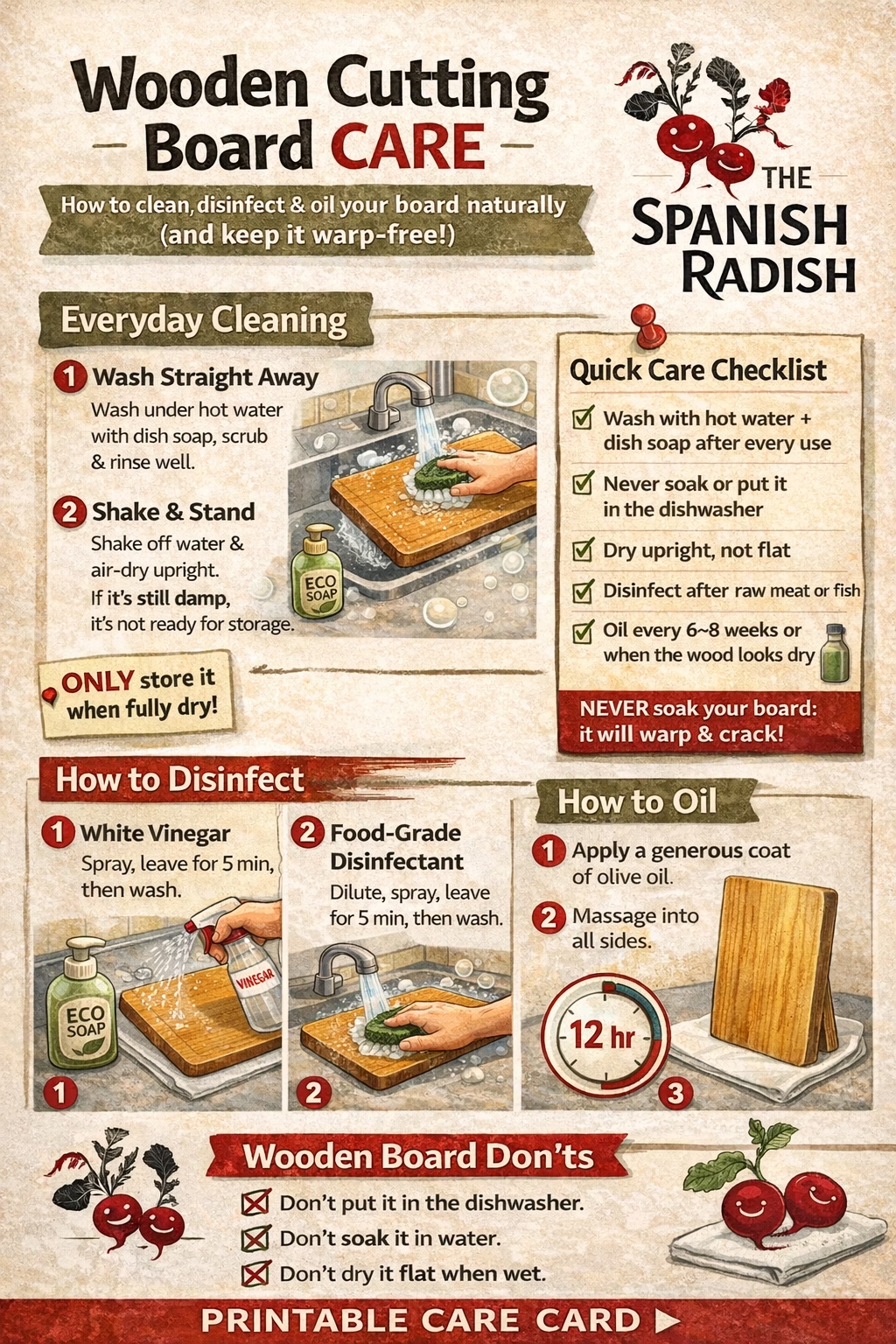
✅ Quick Care Checklist
- Wash with hot water + dish soap after every use
- Never soak or put it in the dishwasher
- Dry upright, not flat
- Disinfect after raw meat or fish
- Oil every 6–8 weeks or when the wood looks dry
🇪🇸 Mediterranean / Spain-Specific Notes
- White vinegar (vinagre blanco) is a staple in Spanish kitchens and works perfectly for disinfecting boards
- Olive oil is the most practical and commonly used oil in Spain for board care
- Upright air-drying works especially well in warm Mediterranean kitchens with good airflow
- Wooden boards are ideal for pan con tomate, garlic, veg prep, and tapas cooking — treat them well and they’ll last for years
🧽 Everyday Cleaning: The Non-Negotiables
This is what you should do after every use.
- Wash straight away
Rinse the board under hot running water and wash with your usual dish soap (eco-friendly is a bonus). Use a brush or scouring pad and give it a proper scrub. - Rinse well
Make sure all soap residue is gone. - Shake & stand
Shake off excess water and leave the board upright to air-dry, supported against a wall or rack.
👉 Laying it flat while wet traps moisture and can cause warping. - Store only when fully dry
If it still feels damp, it’s not ready. Patience here saves boards.

🍋 Dealing With Stubborn Stains (a.k.a. Tomato Trauma or the Beetroot beatdown)
Some stains just refuse to leave — especially from beets, turmeric, or tomatoes. Before you panic:
Try one of these natural scrub combos:
- Baking soda
- Baking soda + lemon juice
- Coarse salt + lemon juice
Rub gently with half a lemon or a cloth. These work thanks to mild abrasion and natural acidity.
✨ Bonus: your board will smell amazing.
🦠 How to Disinfect a Wooden Cutting Board (When It Really Needs It)
Disinfect your board from time to time, especially after cutting raw meat or fish, or if you couldn’t clean it immediately.
Option 1: Vinegar (Simple & Natural)
- Spray or wipe the surface with white vinegar
- Leave for 5 minutes
- Wash with hot water and dish soap
- Air-dry upright
Option 2: Food-Grade Disinfectant
Food-grade disinfectants (often used for fruit and veg) usually contain sodium hypochlorite.
How to use safely:
- Dilute according to the label
- Apply as a spray or with a cloth (do not soak the board)
- Leave for 5 minutes
- Wash with hot water and dish soap
- Air-dry upright
⚠️ Never soak wooden boards — they swell and crack.

🛢️🫒 Oiling Your Wooden Board: Yes, It Matters
Oiling helps your board:
- Absorb less water
- Dry faster
- Resist warping
- Look and feel much nicer
While it’s not proven to stop bacteria completely, a well-oiled board is happier and healthier overall.
How often?
- Every 6–8 weeks, or
- When the board looks dry, feels rough, or takes ages to dry
🫒 What Oil Should You Use? (The Great Debate)
Ah yes. The internet is divided.
- Mineral oil fans say vegetable oils can go rancid
- Olive oil fans (hola 👋) say they’ve used it forever with no issues
Honestly, which is better? You decide.
Oil options:
- Olive oil – practical, absorbs well, easy to find
- Coconut oil – very stable at room temperature
- Board-specific oils – convenient, but often vague about ingredients
I’ve personally used olive oil and coconut oil without problems. Will I change my mind one day? Possibly. Kitchens are full of character development.
🧴 How to Oil Your Board Properly
Only do this when the board is clean and completely dry.
- Coat the board generously with olive oil on both sides (hands or cloth work best)
- Massage it into all corners and edges
- Leave to absorb for 12 hours (overnight is perfect), standing upright on a clean cloth
After soaking:
- If using olive oil: the board should absorb it all — store directly
- If using coconut oil: wash off excess with mild soap, then air-dry upright

🚫 Wooden Board Don’ts (Important read)
- Don’t put it in the dishwasher- Like, never never ever. Steam kills wooden products.
- Don’t soak it in water – This will cause more harm than good and is likely to cause your cutting board to swell up.
- Don’t dry it flat when wet – Best practices are to dry your wooden cutting board vertically using a drying rack or stand.
- Don’t store it damp – Again, this will cause your wooden cutting board to absorb moisture and will likely swell or warp.
Final Thoughts
A wooden cutting board isn’t high-maintenance — it just wants consistency. Clean it properly, disinfect it when needed, oil it occasionally, and it will quietly do its job for years without complaining (unlike most kitchen gadgets).
We recommend cleaning your wooden cutting board immediately after use. Always store vertically in a drying rack and be sure to wipe off any excess liquid with a clean paper towel before storing. Of course, never store a damp wooden cutting board, and when it comes to keeping your cutting board in optimum condition, oiling it with olive oil every 6-8 weeks is a great option.
Don’t forget to download our printable Wooden cutting board care card.
FAQs
Can wooden cutting boards be disinfected safely?
Yes. Wooden cutting boards can be safely disinfected using white vinegar or food-grade disinfectants, as long as they are not soaked and are dried upright.
Is olive oil safe for wooden cutting boards?
Olive oil is commonly used in Mediterranean kitchens and works well if applied sparingly and allowed to absorb fully.
How often should you oil a wooden cutting board?
Every 6–8 weeks, or when the board looks dry, feels rough, or takes longer to dry.