
Spanish Seafood Paella (Authentic Paella de Marisco Recipe)
Last updated: June 1, 2026
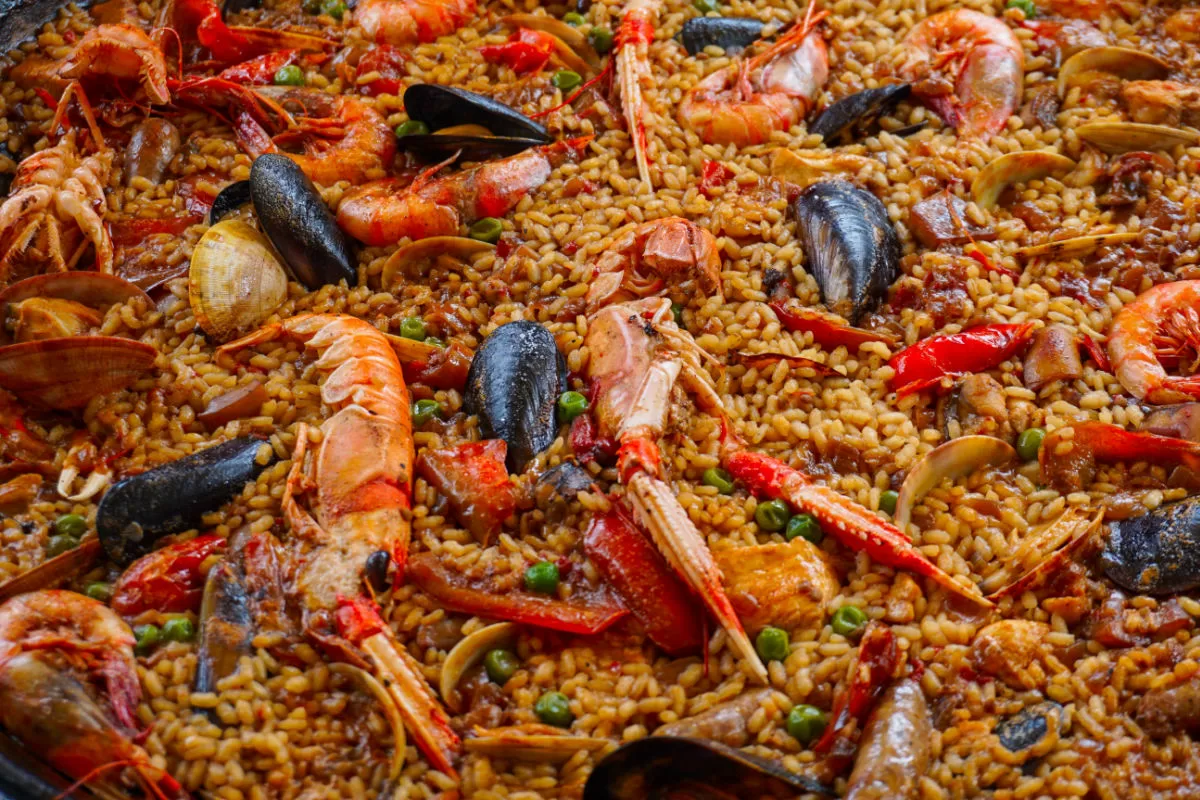
This authentic seafood paella recipe comes from the Valencian region of Spain. Seafood paella is a traditional rice dish that has become synonymous with Spanish cuisine all over the world. The term paella literally translates to ‘pan’ from Valenciano, and the recipe is now considered a national treasure.
Seafood paella is most popular around coastal regions along the Mediterranean Sea, and other paella dishes are typically made with meat, chicken, game, and/or seafood ingredients. Most paella recipes include a range of vegetables such as red and green pepper, garlic, beans and more.
Serving:
4-6 people
Ready in:
1 hour
Skill level:
medium
Serve with:
Lemon wedges and aioli
How to Make Seafood Paella
Equipment
- 50cm (20-inch) paella pan (For 4 people)
- 40cm (15.5-inch) Gas ring with inner and outer rings, and BBQ gas bottle (most gas rings attach onto a normal gas BBQ regulator and hose)
- Large wooden spatula

Ingredients
Method (step-by-step)
(Serve 4-6 people)
- 4 tablespoons olive oil
- 1/2 cup finely chopped onion
- 1 medium green bell pepper, diced
- 1 small red bell pepper, diced
- 3 cloves garlic, minced
- 1 1/2 cups Spanish bomba rice
- 1/4 cup white wine
- 3/4 cup frozen peas
- 1 liter (33 fl. oz.) fish stock (or vegetable stock)
- 1 teaspoon smoked paprika
- 1 teaspoon salt
- 12 medium shrimp
- 12 mussels, (approx 0.5 kg / 2.2 lb.) scrubbed and beards removed
- 10 littleneck clams scrubbed
- 4 langostinos (optional)
- 200 grams (0.5 lb) of white fish, cut into 2.5 cm (1-inch) cubes (optional)
- Chopped parsley and lemon wedges for serving
Method (step-by-step)
Step 1 – Prepare the vegetables
- On medium-high heat, heat the olive oil in a pan (50cm paella pan) and cook the onions for 3-4 minutes until golden.
- Add the bell peppers and cook for another 3 minutes. Add the garlic and cook for a minute, be careful not to burn the garlic!
Step 2 – Add the rice
- Add the rice and stir it around until the rice grains are covered in oil. Add the white wine and bring it to a boil for a minute.
- Add the peas, smoked paprika, and a little of the salt, and stir to combine with the rice. Reduce the heat to medium.
Step 3 – Spread out the rice and add the stock
- Spread out the rice mixture around the pan so that it’s evenly distributed. It should be around 1-2 grains deep.
- Pour the fish stock slowly over the mixture. Reduce the heat again to medium-low and allow the paella to simmer until half of the liquid is absorbed. This should take around 10-12 minutes.
Step 4 – Arrange the seafood
- Artistically arrange the seafood around the paella pan on top of the rice. Add a sprinkle of salt over the dish (optionally, you can add a little lemon juice from a fresh lemon).
- Continue to simmer the paella over medium-low heat for another 20 minutes or until the seafood is cooked through. You should see all of the mussels and clam shells open up once they are cooked.
Tip to get the perfect crispy crust (socarrat):
- Be sure to turn the paella pan every few minutes while cooking the seafood (step 4 as mentioned above). This will position a different section of the paella pan over the flame to help create that crispy bottom crust, famously referred to as socarrat in Spanish.
Step 5 – Let the seafood paella settle
- Remove the pan from the heat and cover the entire pan with some aluminum foil for 10 minutes. This allows the heat from the paella to cook the rice and keeps it remaining crisp.
- IMPORTANT: While it may be tempting to jump straight in, don’t skip this step!
Step 6 – To serve
- To serve, remove the foil and serve garnished with some fresh parsley and a few lemon wedges on top.
About this Spanish seafood paella recipe
Indeed, the paella likely started with humble beginnings, weaving its culinary magic up and down the eastern coast of Spain. But today, when you think of Spanish cuisine, it’s likely the paella that comes to mind. The seafood paella is the perfect blend of fresh ingredients from the sea and is the perfect filling and delicious meal.
Ask any Spaniard and they will describe their seafood paella recipe as something of a family heirloom, especially for many living in and around the Valencia region of Spain where knowing and cooking a traditional paella becomes somewhat of a ritual!
Every family makes and tweaks their own paella recipe slightly differently, adding or subtracting certain ingredients to taste, but one thing that all can agree on is that you must never, never ever stir the rice.
Again, never stir the rice!
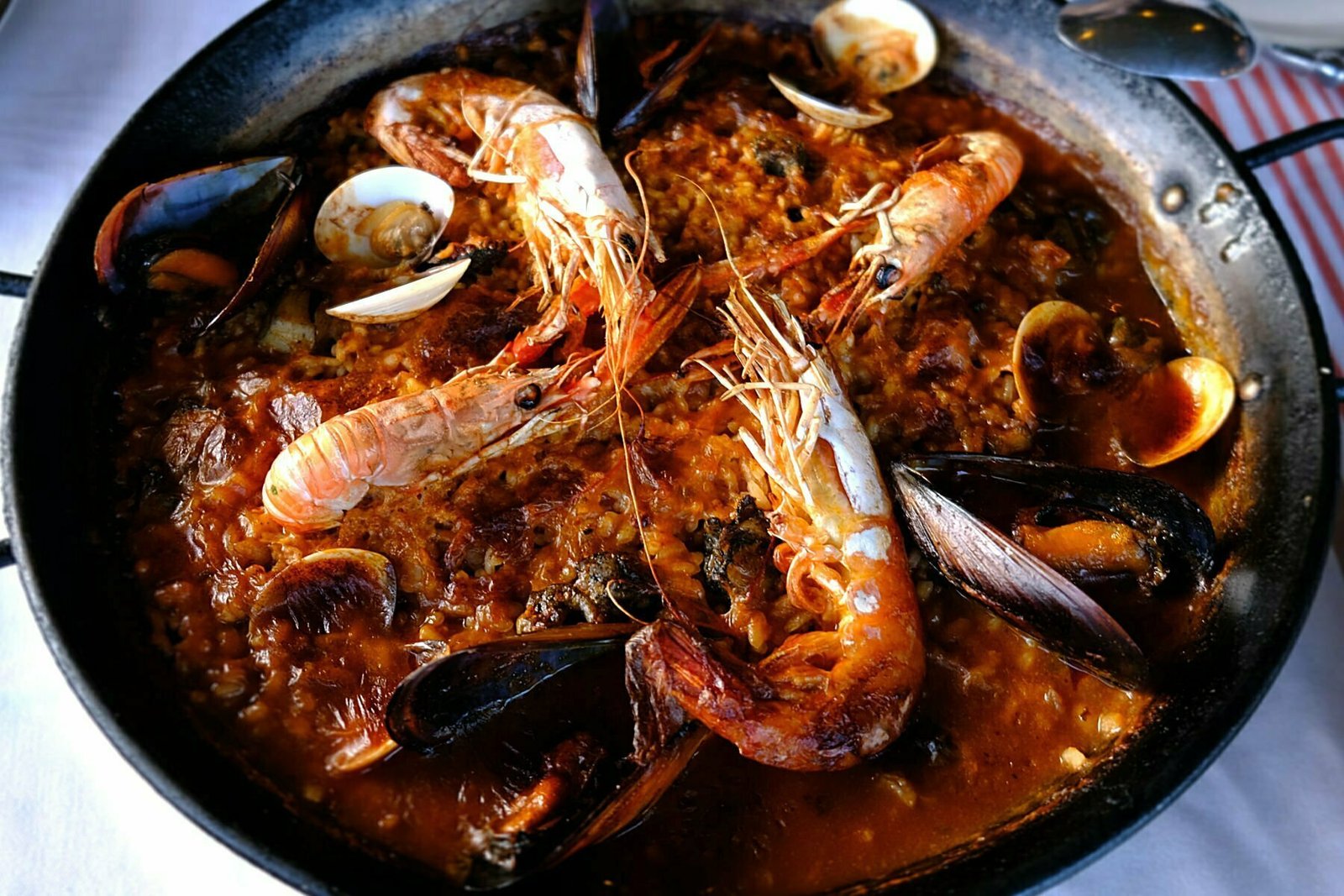
Best rice to make Spanish seafood paella
Rice is also something that should be carefully considered when making paella as not just any rice will work. The best rice to use is Spanish Bomba rice which is traditionally grown throughout the Valencia region of Spain. It’s exported pretty much everywhere so ask your local Spanish grocery store or look for a specialty store online.
Spanish bomba rice works so well as it is a special strain of short-grain rice that absorbs 30% more liquid than other rice varieties yet remains firm.
If you can’t find Spanish Bomba rice, then there are other types of Spanish rice which are usually cheaper but many are regularly used in paellas. If you still can’t find the right Spanish right, you can use the next best thing, arborio rice. Whatever you do, do not use long-grain rice, basmati rice, or any other rice variety. You will end up with rice porridge and your paella will lack the flavor it deserves!
Seafood varations for your paella
While we’ve used typical ingredients that go into a seafood paella, don’t worry if you want to or need to swap some of the seafood for allergy or taste reasons. As I said before, every family and restaurant will have a slight variation. The cooking style is how you’ll achieve an authentic paella and get that beautiful crispy socarrat crust.
The most important thing is to have a selection of seafood (and the right rice). Another great option is squid. You could even go crazy and add some lobster or scallops. But don’t worry, it doesn’t need expensive seafood at all since it’s cooked in that beautiful savory stock and has loads of spices, so I honestly think keeping it simple is best for a seafood paella.
While fresh seafood will typically give you a more flavorful dish, depending on where you live, and how expensive or hard to source seafood is at the time, you can absolutely use frozen seafood. In fact, there are frozen paella seafood mix packs that are sold in supermarkets in Spain, so it’s certainly fine to do at home. Just make sure you thaw your seafood slowly in the fridge and add all the juices to your stock so you keep as much flavor as you can.
General paella information
Paella Valenciana – The original and most popular paella from the Valencian region. Made with chicken and/or pork, and rabbit, as well as beans, red and green peppers, and rice.
Paella de Marisco – A meatless paella that contains prawns, mussels, squid, clams, and other seafood. It is known as Paella Marinera when it has 5 seafood ingredients.
Paella Vegetariana – Made with vegetables such as artichokes, beans, red and green peppers, and rice.
Paella Negra – Cooked with black squid ink and includes shrimp, squid, white fish, and rice
Paella Mixta – Also known as the paella Andaluz, this paella is always popular with tourists and is made with meat, chicken, and seafood.

Traditional paella
The traditional paella (paella Valenciano) remains hugely popular throughout the Valencian region, and throughout greater Spain. There are also quite a few varieties and flavors of paella to sample and they are only increasing as chefs experiment more with the dish.
Perhaps one of the most popular paellas on the international food circuit is the paella de marisco (seafood paella). It’s made using the same technique as a traditional paella but uses a mixture of fresh seafood instead of meat and game ingredients.
Arroz vs paella dishes
If you’re ever visiting the Mediterranean coastal region in or around Valencia, you’ll find hundreds of seaside restaurants offering seafood paella and other rice dishes (rice being arroz in Castellano Spanish or arros in Valenciano).
While these dishes are pretty much made using the same technique as a paella (and come served in the same paella pan) they do not share the ‘paella’ namesake. Some examples include Arròs a banda and Arròs negre.
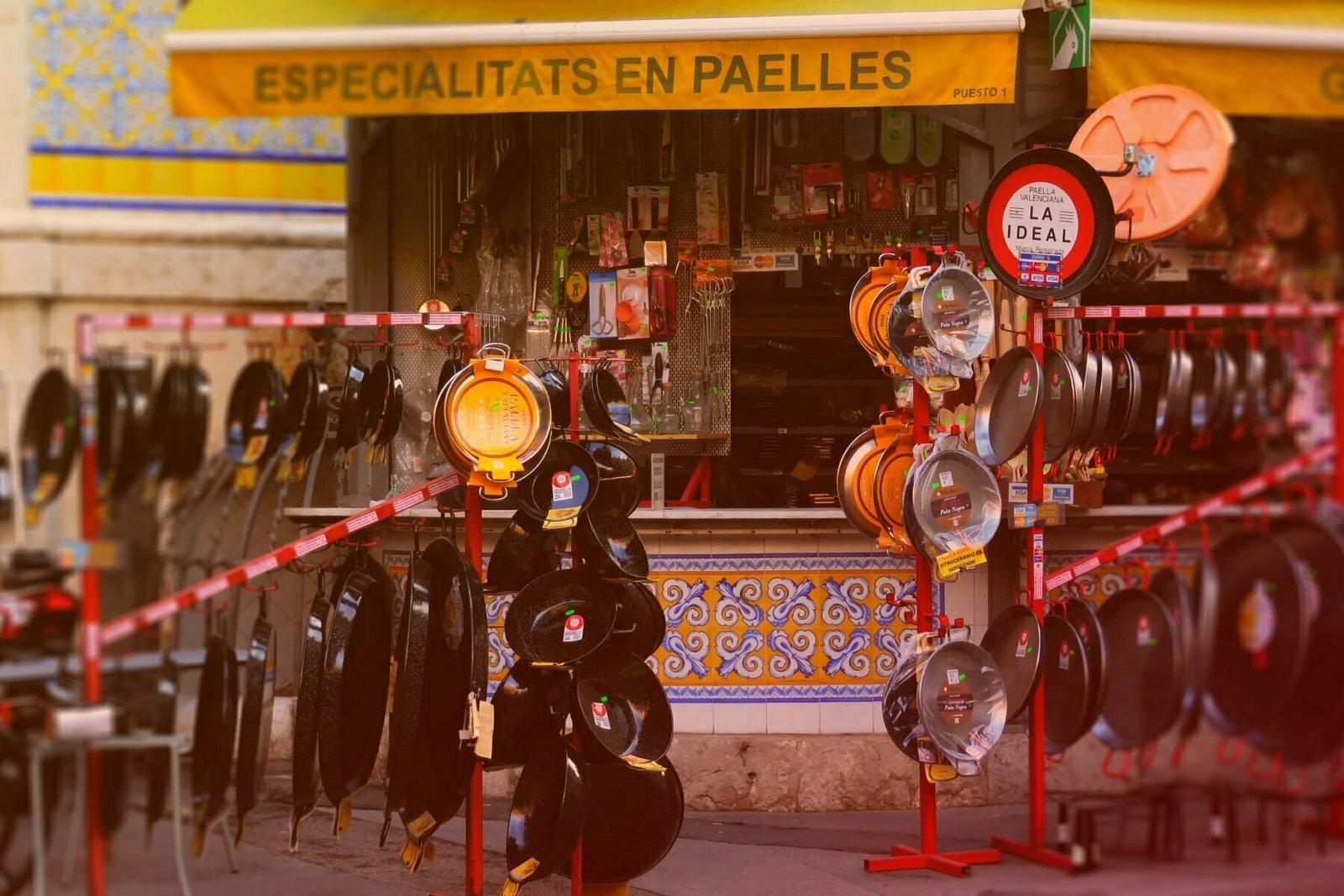
Do you need a paella pan to make seafood paella?
Historically, paella was made in the same large pans that you see it made in today, although it was cooked over hot coals which led to the dish having a slightly smoky flavor.
Nowadays, most people use a gas ring that suitably distributes heat over the entire surface of the paella pan. They have added smoked paprika to reintroduce some of the smoky flavors that is missed when not using a fire.
Making a paella without a paella pan is possible, although it is certainly more difficult and frankly frowned upon by most Spaniards. However, the fact remains, any large pan and heat source that can distribute the heat evenly over the pan will work just fine.
Why use a paella pan?
The size of the pan is also very important. Most paellas are made with a thickness of around 2 grains of rice (around ¼ inch), so to feed 4 people, you’ll need a pan around 50cm (20 inches) in diameter. You also need a heat source that can distribute the heat to the entire pan so that rules out most gas stove tops.
If you’re serious about making the perfect paella, invest in a traditional steel paella pan and a gas ring to suit the pan size you have. Not only will it make life easier to cook paella, you’ll impress all the Spanish folk you know!

Spanish Seafood Paella

Equipment
- 1 50cm (20-inch) paella pan (For 4-6 people)
- 1 40cm (15.5-inch) Gas ring with inner and outer rings, and BBQ gas bottle (most gas rings attach onto a normal gas BBQ regulator and hose)
- 1 large wooden spatula or spoon for serving
Ingredients
- 4 tablespoons extra virgin olive oil
- 1/2 cup onion finely chopped
- 1 medium green bell pepper diced
- 1 small red bell pepper diced
- 3 cloves garlic minced
- 1 1/2 cups Spanish bomba rice
- 1/4 cup white wine
- 3/4 cup frozen peas
- 1 liter 33 fl. oz. fish stock (or vegetable stock)
- 1 teaspoon smoked paprika
- 1 teaspoon salt
- 12 medium shrimp
- 12 mussels (approx 0.5 kg / 2.2 lb.) scrubbed and beards removed
- 10 littleneck clams scrubbed
- 4 langostinos optional
- 200 grams 0.5 lb of white fish cut into 2.5 cm (1-inch) cubes (optional)
- Chopped parsley and lemon wedges (for serving)
Instructions
STEP 1 - Prepare the vegetables
- On medium-high heat, heat the olive oil in a pan (50cm paella pan) and cook the onions for 3-4 minutes until golden.
- Add the bell peppers and cook for another 3 minutes. Add the garlic and cook for a minute, be careful not to burn the garlic!
Step 2 - Add the rice
- Add the rice and stir it around until the rice grains are covered in oil. Add the white wine and bring it to a boil for a minute.
- Add the peas, smoked paprika, and a little of the salt, and stir to combine with the rice. Reduce the heat to medium.
Step 3 - Spread out the rice and add the stock
- Spread out the rice mixture around the pan so that it's evenly distributed. It should be around 1-2 grains deep.
- Pour the fish stock slowly over the mixture. Reduce the heat again to medium-low and allow the paella to simmer until half of the liquid is absorbed. This should take around 10-12 minutes.
Step 4 - Arrange the seafood
- Artistically arrange the seafood around the paella pan on top of the rice. Add a sprinkle of salt over the dish (optionally, you can add a little lemon juice from a fresh lemon).
- Continue to simmer the paella over medium-low heat for another 20 minutes or until the seafood is cooked through. You should see all of the mussels and clam shells open up once they are cooked.
- Tip to get the perfect crispy crust (socarrat):
- Be sure to turn the paella pan every few minutes while cooking the seafood (step 4 as mentioned above). This will position a different section of the paella pan over the flame to help create that crispy bottom crust, famously referred to as socarrat in Spanish.
Step 5 - Let the seafood paella settle
- Remove the pan from the heat and cover the entire pan with some aluminum foil for 10 minutes. This allows the heat from the paella to cook the rice and keeps it remaining crisp.
- IMPORTANT: While it may be tempting to jump straight in, don’t skip this step!
Step 6 - To serve
- To serve, remove the foil and serve garnished with some fresh parsley and a few lemon wedges on top.
Notes

Seafood paella-nutirition facts
FAQs
Can I use frozen seafood in paella?
Yes, you can. While fresh will usually provide a stronger flavor and better texture, you can use frozen (uncooked) seafood in your paella. Just make sure you defrost it slowly in the fridge and use any of the defrosted juices in your stock so you don’t lose that flavor.
Are there any similar rice dishes I can make without a paella pan?
There are several rice dishes you can make without a paella pan or specialty equipment: Spanish oven-baked rice (arroz al horno), brothy fish stew (arroz caldoso de pescado), spicy chicken and chorizo rice, and sheet pan chicken chorizo rice (weeknight dinner).
Is this seafood paella recipe healthy?
It is overall a healthy meal that is nutrient-dense and low in fat. Just watch the stock you use or how much salt you add to homemade stock, especially if you’re following a low sodium diet. And if you have high cholesterol, consider leaving the shrimp out and adding more fish or vegetables in their place.