Spanish Olive Oil
Explained: Picual, Arbequina, Hojiblanca & Cornicabra 🇪🇸 🫒
Discover Spanish olive oil varieties, including Picual, Arbequina, Hojiblanca & Cornicabra with our complete Spanish Olive Oil guide.
Spanish olive oil is considered among the best in the world, with Spain producing nearly half of all olive oil globally. From robust Picual oils to delicate Arbequina varieties, Spanish olive oils offer a wide range of flavors and culinary uses. This guide explains the main Spanish olive oil types, how to choose the right one, and the best ways to use each variety in the kitchen.
Olive oil is synonymous with the Mediterranean Diet, and most of it is produced in the region. Spain accounts for around 45% of global production, making it the number one producer. From grassy and peppery oils to buttery and delicate ones, Spain’s olive oils are as varied as its wines.
Table of Contents

What Are the Main Types of Spanish Olive Oil?
The four most important Spanish olive oil varieties are:
- Picual – bold, peppery, and ideal for cooking
- Arbequina – mild, buttery, and perfect for salads
- Hojiblanca – balanced and versatile
- Cornicabra – robust and excellent for frying
Each variety has distinct flavor characteristics and culinary applications.
A Quick History of Olive Oil in Spain
Olive trees have been growing on the Iberian Peninsula for thousands of years. It’s said that the Phoenicians first introduced olive cultivation around 1100 BC, which is around the time they also began planting the first vineyards that would lead to Spanish sherry.
Today, olive oil is woven into daily Spanish life. While there are many different figures floating around for this next stat, the average consumption per person in Spain per year is approximately 10 liters. Some state much less and others even more but this figure seems about right when I consider how much olive oil I see in shopping baskets, on restaurant tables, and based on how much we use in our household each year.
It’s not just used for cooking in savory dishes, it’s drizzled over toast at breakfast, poured over salads, and used in desserts (yep, many of ours feature olive oil too).
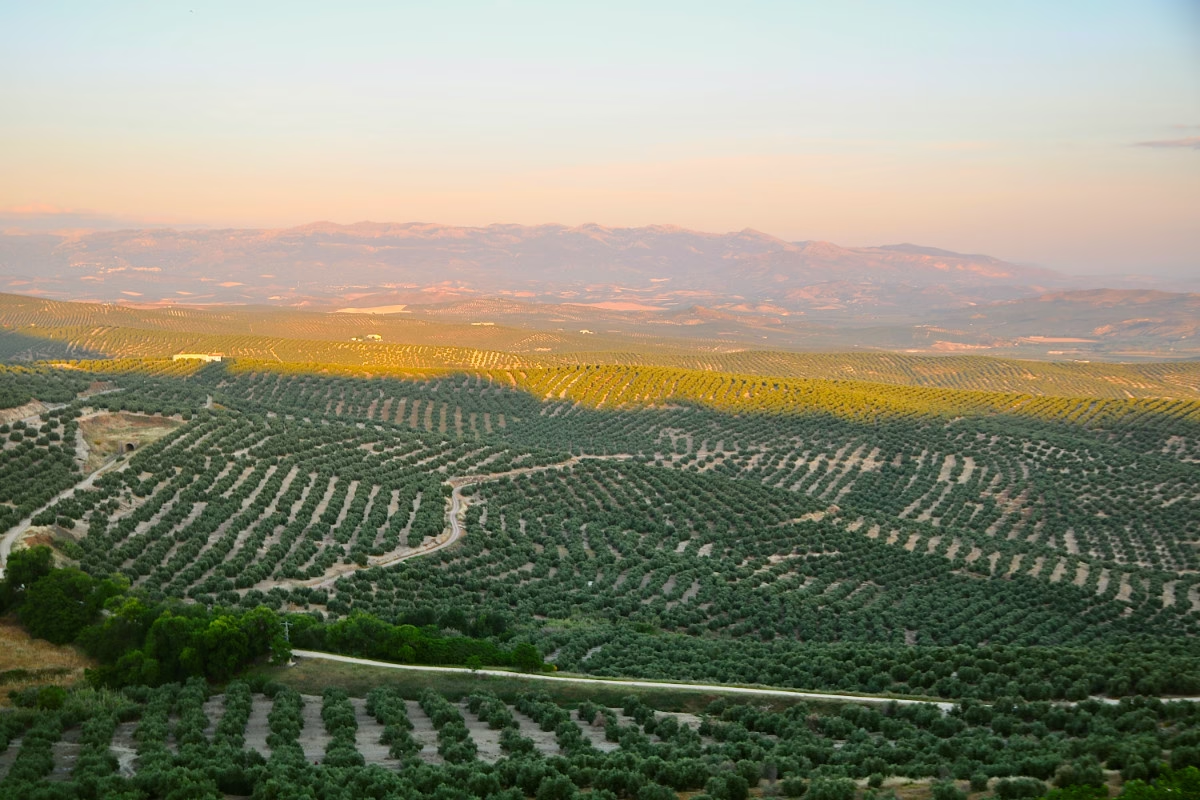
The heart of Spanish olive oil production is Andalusia, especially the province of Jaén, often called the “world capital of olive oil.” But every region produces oils with their own personality.
Understanding Spanish Olive Oil Labels
Before exploring the different regions and varieties of oilve oil, here’s a highlight of the main categories you’ll find in stores.
Extra Virgin Olive Oil (EVOO)
This is the highest-quality olive oil. It’s mechanically extracted without chemicals or excessive heat and must have very low acidity levels. While all olive oils are healthy, this is typically considered the cream of the crop, especially those labeled early harvest or first cold pressed.
Flavor-wise, EVOO can range from fruity and mild, herbaceous and grassy, peppery and bitter, to nutty and buttery. The bitter and peppery notes are actually signs of freshness and being high in antioxidants.
Virgin Olive Oil
Virgin olive oil is still high quality but has slightly higher acidity and a milder flavor than extra virgin olive oil.. They have slightly more acidity and a less intense flavor. They also don’t have the same antioxidant levels, but still contain plenty, as well as beneficial monounsaturated fats, so are a great dietary fat option.
Pure Olive Oil
Sometimes labeled as just “olive oil,” these are more processed and generally milder. They’re fine for frying or baking with, but lack the complexity and flavor you want for using as a finishing oil on meals, over salads, or in sauces.
What Does DOP Mean on Spanish Olive Oil?
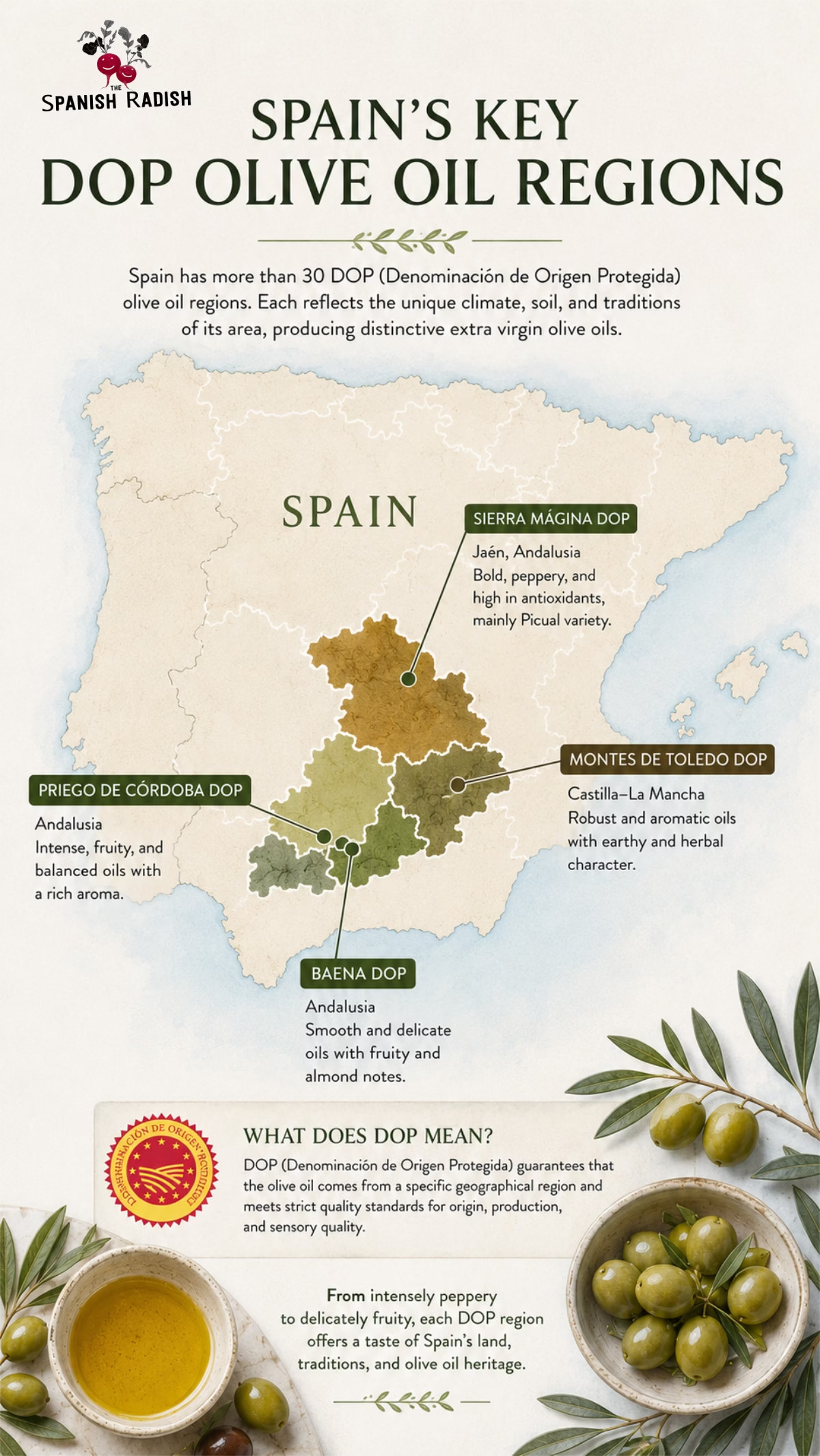
When shopping for Spanish olive oil, you may notice the letters DOP (Denominación de Origen Protegida), which translates to Protected Designation of Origin.
This certification guarantees that the olive oil comes from a specific geographical region and has been produced, processed, and bottled according to strict quality standards. Similar to how certain wines, cheeses, and hams are protected, DOP olive oils must meet rigorous requirements relating to origin, olive varieties, production methods, and sensory quality.
Spain has more than 30 DOP olive oil regions, each reflecting the unique climate, soil, and traditions of its area. Well-known examples include Baena and Priego de Córdoba in Andalusia, Sierra Mágina in Jaén, and Montes de Toledo in Castilla–La Mancha. While the olive variety plays a major role in flavor, the region where the olives are grown also influences the final oil, creating distinctive local styles that range from intensely peppery to delicately fruity.
For consumers, a DOP seal offers an extra level of confidence. It helps ensure authenticity, traceability, and consistent quality while supporting traditional producers and regional food cultures.
Although excellent olive oils can be found without DOP certification, choosing a DOP-certified extra virgin olive oil is often a reliable way to experience some of Spain’s finest and most representative oils.
The Main Spanish Olive Oil Varieties
Spain grows hundreds of olive cultivars, but four dominate the market and define the country’s olive oil styles. These will also be the easiest to find overseas. Let’s look at the nuances between them and what type of dishes work particularly well with each one.
There are overlaps between some of the varieties, and don’t feel like you have to run out and buy one of each to use in the kitchen. It should also come down to personal preference, and if you find a favorite, that’s great — use it whenever you like! This is just a guide and some common principles when using olive oil in the kitchen.
Picual
Picual is Spain’s most widely grown olive variety, and is mainly found in Andalusia. This has the strongest flavor, so if you’ve only ever tried this and thought it was a little punchy, try an arbequina or hojiblanca.
Flavor profile: Bold and intense, green tomato and fresh-cut grass notes, peppery finish, and a light bitterness. As you might have guessed from their flavor notes, picual oils are high in antioxidants and oleic acid, which makes them amazing for you healthwise.
They also have excellent stability in relation to high temperatures and a long shelf life. But although it has a long shelf life, many experts agree if you’re consuming olive oil for health purposes, use them in under nine months to reap the most of their nutritional benefits.
Best culinary uses: Because it holds up well to heat, picual is one of the best olive oils for cooking at high temperatures. But its strong flavor also makes it popular with many types of cold dishes. Consider using it for grilling meats, roasting vegetables, stews, cold soups, frying, and drizzling over or dipping bread in.
Recipe ideas: Pan con tomate (Spanish tomato bread), traditional salmorejo or vegan salmorejo, grilled Mediterranean chicken breasts, pork tenderloin with garlic and sherry.
Main growing areas: Andalusia (Jaén, Córdoba, and Granada).
Arbequina
Arbequina is popular thanks to its soft, sweet flavor. This makes it a great olive oil to try if you find picual too strong. It’s also great to use in dishes where you don’t want the olive oil to overpower delicate flavors. Many blended Spanish oils use arbequina to soften stronger varieties.
Flavor profile: Mild and buttery, almond and apple notes, and a smooth finish.
Best culinary uses: Salad dressings, baking, mayonnaise and aioli, fish and seafood dishes, and milder flavored recipes.
Recipe ideas: Mediterranean fish stew from Catalonia, apple cake with olive oil, 1-minute Mediterranean salad dressing, spicy grilled shrimp with tangy peach salad.
Main growing areas: Originally from Catalonia, it’s also grown in Aragón and Navarra.
Hojiblanca
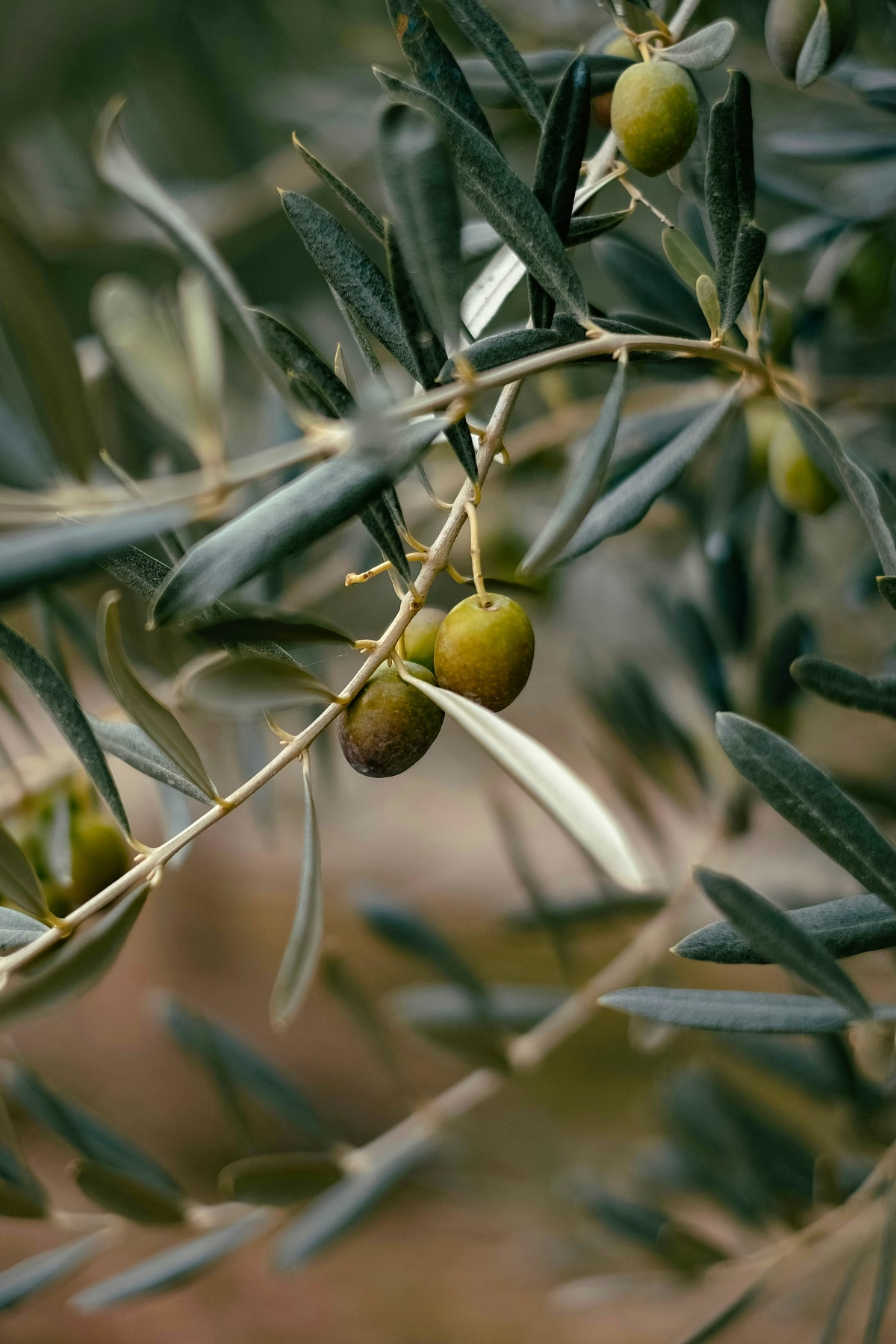
Hojiblanca means “white leaf,” named after the pale underside of the olive tree’s leaves. This is a versatile olive oil that lies somewhere between the intensity of picual and the softness of arbequina.
Flavor profile: Herbaceous, slightly sweet at first, and a mild peppery finish.
Best culinary uses: Pasta, potato dishes, and salads with stronger ingredients.
Recipe ideas: Shrimp and mussels pasta, potatoes mozarabic (Andalusian tapa), Andalusian orange salt cod salad, white bean salad with sardines.
Main growing areas: Andalusia (Málaga, Córdoba, and Seville).
Cornicabra
Named after its horn-shaped olives, Cornicabra is common in central Spain. It remains stable at high heats so is another great option for cooking with, but its robust flavor profile also makes it perfect when you want a strong finish of olive oil on cold dishes.
Flavor profile: Deep and earthy, slight bitterness, herbal and nutty notes, and a long finish.
Best culinary uses: Frying and sautéing, marinades, strong salad greens like arugula (rocket), garlic-intense dishes.
Recipe ideas: Flamenco eggs with chorizo, vegetable pisto with eggs, Spanish chicken marinade, Spanish garlic mushrooms.
Main growing area: Castilla–La Mancha.
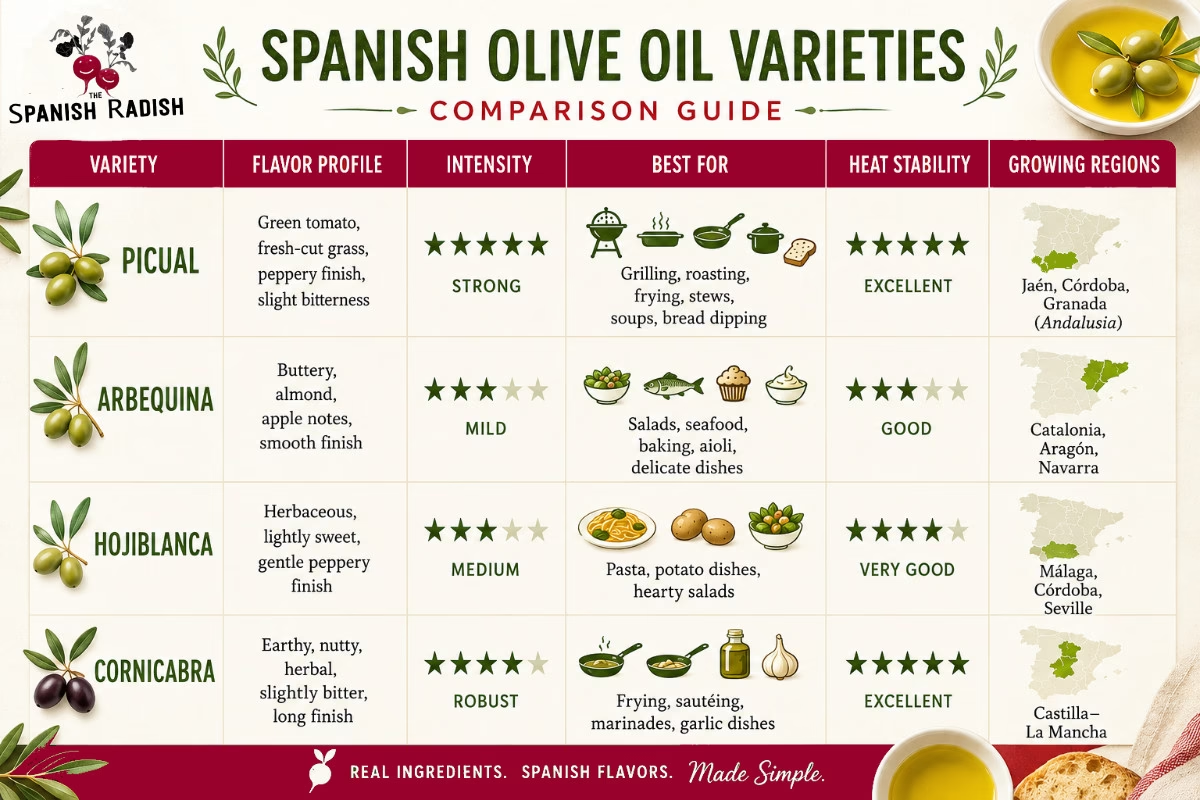
Spanish Olive Oil Varieties Comparison Table
| Variety | Flavor Profile | Intensity | Best For | Heat Stability | Growing Regions |
| Picual | Green tomato, fresh-cut grass, peppery finish, slight bitterness | ★★★★★ Strong | Grilling, roasting, frying, stews, soups, bread dipping | ★★★★★ Excellent | Jaén, Córdoba, Granada (Andalusia) |
| Arbequina | Buttery, almond, apple notes, smooth finish | ★★☆☆☆ Mild | Salads, seafood, baking, aioli, delicate dishes | ★★★☆☆ Good | Catalonia, Aragón, Navarra |
| Hojiblanca | Herbaceous, lightly sweet, gentle peppery finish | ★★★☆☆ Medium | Pasta, potato dishes, hearty salads | ★★★★☆ Very Good | Málaga, Córdoba, Seville |
| Cornicabra | Earthy, nutty, herbal, slightly bitter, long finish | ★★★★☆ Robust | Frying, sautéing, marinades, garlic dishes | ★★★★★ Excellent | Castilla–La Mancha |
How to Choose the Right Olive Oil for You
There are certain dishes that traditionally lend themselves to one type of olive oil, however, none of it is set in stone! If you have a particular olive oil you love, use it. All olive oils are nutritious, especially extra virgin olive oils. And when one person might enjoy the bitterness of stronger oils, another won’t.
As with many foods, I find the more you consume it, the stronger flavor you often want. That’s true for us anyway, but we always keep at least five or six oils in the pantry and use different ones for different purposes and to mix things up a bit.
Every year at Christmas, we treat ourselves and buy four bottles we’ve never tried before and that you can’t buy in the local supermarket.
This makes them a little more exclusive and expensive, but we reserve these for special dishes or just drizzling on bread or a plain salad to really appreciate the flavor. We always try them side by side to begin with, which helps to note the differences.
This is our most recent selection. You can see how different the coloring can be, so imagine the contrasting flavors. We also keep a couple of bottles of EVOO from the supermarket that we use for cooking and daily use. Good quality olive oil often comes in an opaque bottle, so this can be a good place to start if you’re not sure which to choose. These bottles help protect the oil from light, preserving its flavor, freshness, and nutritional value for longer.
Happy olive oil tasting!
FAQs
What does cold pressed mean?
You’ll often see “cold pressed” on labels. Traditionally, olives were physically pressed to extract oil. Modern extraction is usually done by centrifuge instead. Today, “cold extracted” is more accurate and means the oil was processed at low temperatures to preserve flavor and nutrients.
Why do some olive oils taste bitter or peppery?
That peppery sensation in the throat comes from polyphenols, which are natural antioxidant compounds that are linked to many of olive oil’s health benefits. This is a positive trait, although you may want a milder oil for some dishes.
Which olive oil is the best to cook with?
When cooking at high temperatures, it’s best to use a picual or cornicabra, since these stand up to heat and intense cooking.
What Is the Most Popular Olive Oil Variety in Spain?
Picual is the most widely grown olive variety in Spain and accounts for roughly half of Spanish olive oil production.
Which Spanish Olive Oil Is the Mildest?
Arbequina is generally considered the mildest and sweetest Spanish olive oil variety, with buttery notes and very little bitterness.
Is Spanish Olive Oil Better Than Italian Olive Oil?
We say YES, but of course, we are a little biased lol! HOwever, the fact still remains that Spain produces more olive oil than any other country and offers a huge range of styles. The best choice depends on the variety, quality, freshness, and intended use.
How Should I Store Olive Oil?
You should always store olive oil at a consistent cool (but not cold) room temperature and in a cupboard away from light and heat sources (so not next to the oven). Each time you use it, close the lid immediately to keep oxygen out too.
Once you open a bottle, the flavor and nutrients start to deteriorate, so don’t collect oil like you would wine. Many experts recommend using olive oil within nine months of opening and within three years of bottling for the best flavor and nutritional value. But, olive oil doesn’t spoil, so it shouldn’t be harmful if stored properly. It just loses its wonderful flavor and health properties over time.