
Spanish Cocas | Authentic Valencian & Catalan Flatbread Recipe (2 Easy Toppings)
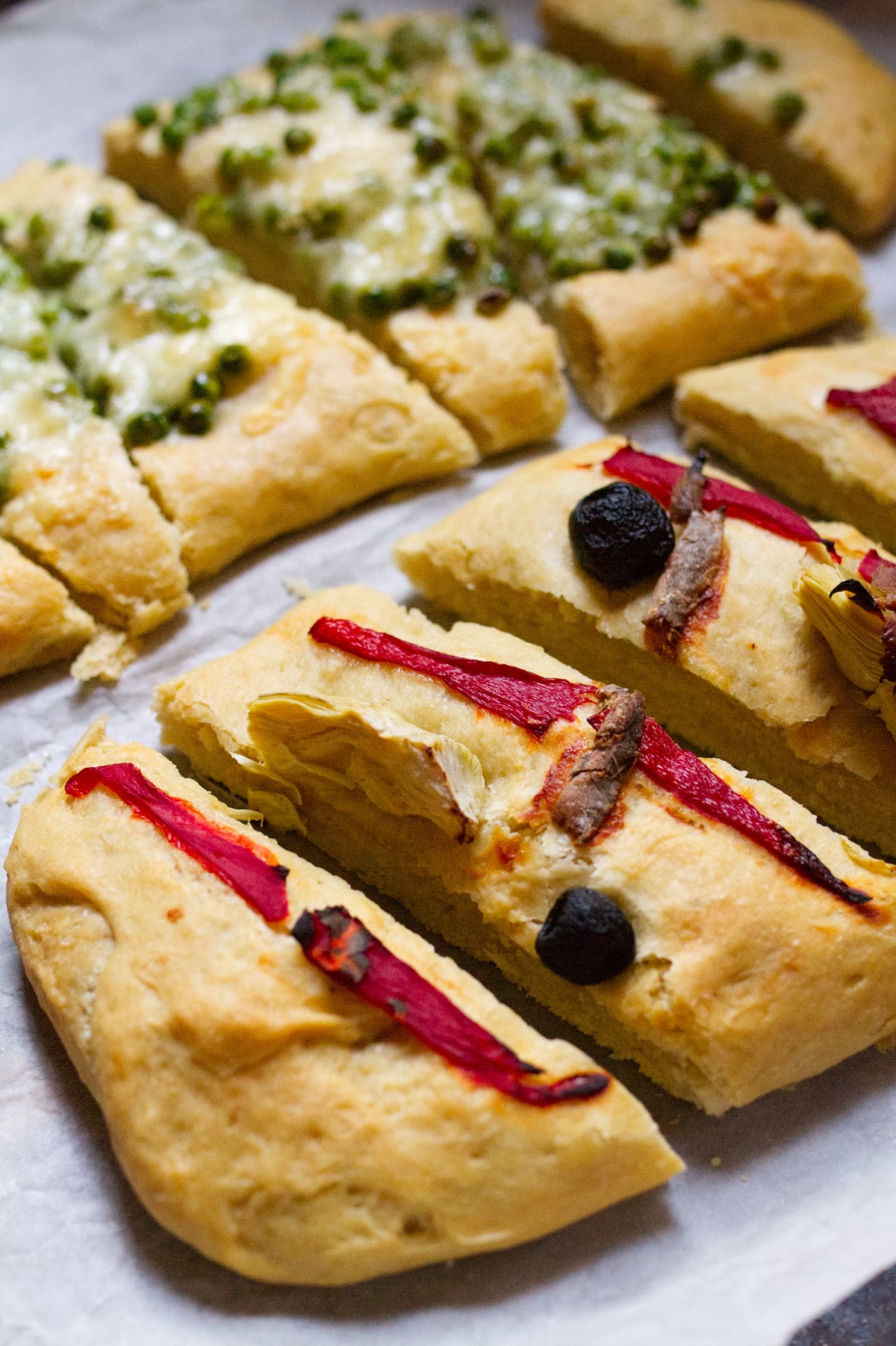
Spanish Cocas are something of a mystery to most people living outside of Spain, and are best described as delicious flatbreads with a variety of toppings. If you’re looking for a tasty tapas recipe or snack that is easy to make and oozes traditional Spanish cooking vibes, you’re going to love Cocas. Just whatever you do, don’t call them pizza!
Spanish Cocas are traditional Mediterranean flatbreads from the eastern coast of Spain, topped with vegetables, cheese, seafood, or sweet ingredients. In this recipe, you’ll learn how to make two classic Spanish Cocas at home: Coca de Recapte with anchovies and roasted vegetables, and Cocas de Guisantes with manchego cheese and peas.
Both use easy-to-find ingredients that work perfectly on the homemade coca dough and offer a delicious flavor combo that’s super Spanish. These toppings are combinations that we’ve encountered up and down the eastern coast of Spain.
This post may contain affiliate links.
Serving:
Tapas for 4
Ready in:
2 hours, 40 minutes
Skill level:
Easy
Serve with:
Beer, wine, tapas!
Watch step-by-step recipe video
🎥 Prefer to watch? Check out the Spanish Cocas Step-by-step video recipe guide here, or click on the thumbnail below to watch the video on our YouTube Channel.
What are Spanish Cocas?
Spanish Cocas (pronounced ‘KOH-kahs’ in Spanish) are traditional flatbreads from Valencia and Catalonia, made with an olive-oil-rich dough and topped with savory or sweet ingredients. They are commonly enjoyed as tapas, snacks, or bakery treats along Spain’s Mediterranean coast.
Unlike Italian pizza, Spanish Cocas are not typically made with a tomato-and-mozzarella base. Their dough is richer in olive oil, their toppings are often simpler and more regional, and they are commonly enjoyed as tapas, snacks, bakery treats, or summer festival foods.
Learning how to make Spanish Cocas at home is one of the best ways to experience the authentic flavors of Valencia and Catalonia.
Cultural Significance to Spanish Cuisine
Spanish Cocas are not just a type of flatbread — they are a cherished part of the culinary heritage of Valencia and Catalonia, two regions on Spain’s Mediterranean coast. In Valencia and Catalonia, cocas are often enjoyed as a casual snack, tapas dish, light lunch or dinner, or bakery treat. Traditional varieties such as Coca de Recapte are celebrated for their rustic toppings of roasted vegetables, olives, and anchovies.
These regions share a love of olive oil, seasonal produce, and simple Mediterranean cooking, and Spanish Cocas perfectly reflect that tradition. Each town and bakery may have its own variation, making cocas one of the most authentic and diverse foods of Spain’s eastern coast.

How to Make Spanish Cocas
We will make two different types of savory cocas to keep things varied. These are two classic cocas recipes that are pretty common all the way up and down the eastern coast of Spain. They are by no means the only toppings you can use, so feel free to add or omit ingredients as you like.
Today we are making:
Cocas de Guisantes Con Queso Manchego – Savory Flatbread With Green Peas And Manchego
Coca de Recapte Con Anchoas – Savory Flatbread With Roasted Vegetables And Anchovies
Ingredients:
Coca Dough:
(makes 2 large cocas)
- 500 g (17.5 oz) strong bread flour
- 150 ml (5 fl oz) extra virgin olive oil
- 150 ml (5 fl oz) water
- 20–25 g (0.7-0.9 oz) fresh yeast, or approximately 14 g (0.5 g) of active dry (powdered) yeast (typically 2 sachets)
- 5 g (large pinch) salt
Toppings for Coca de Recapte Con Anchoas:
- 100g (3.5 oz) jar piquillo peppers, sliced into long strips
- 100g (3.5 oz) jar artichokes (whole or quartered)
- Pitted black olives
- 2-3 Anchovies
- Extra virgin olive oil
Toppings for Cocas de Guisantes Con Queso Manchego:
- 100g (3.5 oz) Green peas (fresh or frozen)
- 100g (3.5 oz) Manchego cheese, grated
Equipment
- Sieve for the flour
- Large mixing bowl
- Damp kitchen towel
- Measuring cups and spoons
- Box grater
- Cutting board
- Chef knife
- Large baking tray
- Oven

Instructions
Step 1 – Prepare the Coca Dough
- Start by sieving the flour into a large bowl.
- Add the powdered yeast, salt, water and olive oil and mix with a large spoon for around 30 seconds. It will look a little gooey.
- Add a dusting of flour to a clean benchtop, then roll the dough out and knead by hand for around 1-2 minutes. It should become an elastic ball that easily sticks together, and will be slightly moist but not sticky.
Note: if the dough looks dry and is flaking apart, add a splash more water and continue to knead the dough until you get an even ball with the right texture as mentioned above.
- Cover the dough with a damp kitchen cloth and set aside to rise (at room temperature) for 1–2 hours.
- Optional: If refrigerating, add to the fridge covered and refrigerate for at least 24 hours. When ready to use, bring the dough to room temperature before dividing into individual cocas.
Step 2 – Prepare the Cocas Toppings
Preheat a fan-forced oven to 200°C (400°F).
- Start by dividing the coca dough into 2 even pieces, then flatten out each piece with your hands and fingers until they are around 1 cm (½ inch) thick. Note that they don’t need to be perfectly flat or smooth, a few divots in the dough actually helps the toppings stay intact.
- For the cocas with roasted veg and anchovies: Slice the piquillo peppers into thin strips, around half an inch thick (1cm) and add to the cocas, then add some pieces of artichoke.
- Top with 2-3 anchovies and a few black olives as garnish.
- For the pea and Manchego cocas: add some peas first, then top with grated manchego cheese.
Step 3 – Bake Cocas and Serve
- Transfer the cocas onto a lined baking tray.
- Bake for 20 minutes, just until the toppings begin to crisp up and the cheese is melted.
- Serve with a glass of Spanish wine or beer. Salud!

How to Store and Reheat Spanish Cocas
- Store leftover Spanish Cocas in an airtight container in the refrigerator for up to 2 days.
- To reheat, place them in a 180°C (350°F) oven for 5–7 minutes until the edges are crisp again.
- Avoid microwaving, as it can make the dough soft.
Where to Find Cocas?
In local Spanish bakeries (Panaderías) in the early morning (they often sell out before midday so look for the queues of people). They’re served cold, or just warm if you’re first in line at the bakery and are something of a celebration of sunshine, particularly in summer.
Wherever you try Spanish Cocas, you’ll find regional variations. Each bakery and family recipe has its own unique combination of dough, toppings, and tradition. They’re like a homemade staple that everyone makes differently, and that’s the beauty of cocas, “no two cocas are ever the same!”
Make Cocas at Home
Fortunately, making cocas at home isn’t difficult and there are three simple steps:
- Preparing the dough
- Adding toppings
- Baking
Cocas Dough
The dough can be whipped up with around 2-3 minutes of prep and should be left to rise for 1-2 hours for best results (we suggest 2 hours). Cocas dough has literally 5 ingredients and once mixed and kneaded, it forms an elastic dough.
Keep it whole and covered in a damp kitchen cloth while it’s resting/rising, then break it into smaller pieces when making the cocas. Use your hands to flatten out the dough, no rolling pin required (watch the video on how to make Spanish Cocas here).
Coca dough can be made any size, but we usually make them quite large and around half an inch thick (1cm) . This allows for 2 large cocas per oven tray with a little bit of room, they can easily be sliced up later for easier serving
And now it’s time to talk toppings!

Cocas Toppings
Toppings can be whatever you like, but regional vegetables are likely the most popular toppings for cocas. It’s very typical to find prepared (canned) vegetables as toppings making it easy to make them with a few Spanish pantry staples. One great example is Coca de verduras.
Sardines and anchovies, olives, and capers are all popular options. Tuna also features on the popular Coca amb tonyina.
As are green peas (guisantes) topped with Spanish cheese (Manchego), sounds weird I know, but they taste amazing together and are a masterclass in embracing classic Spanish ingredients for their distinctive flavor and texture.
Coca de Recapte Con Anchoas is a traditional Catalan and Valencian variety, known for roasted vegetables and anchovies.
If you enjoy traditional Spanish flatbreads, you may also love our Pumpkin and Caramelized Onion Cocas recipe, another delicious variation inspired by Spain’s Mediterranean baking traditions
A few cocas topping suggestions:
- Grilled eggplant
- Slices of piquillo peppers
- Manchego Reserve (Extra Aged) (grated or slices)
- Artichoke hearts
- Olives
- Roasted veg (escalivada)
- Vegetable pisto
- Spinach
Make Cocas With a Variety of Toppings
One thing that goes without saying is that you must serve cocas with a few different flavor combos. Think of this as the half/half pizza of your dreams, so go wild and add whatever you like.
The smaller you make the coca bases, the more you have a chance to experiment.
Best Flour to Use for Cocas Dough
For a traditional coca salada (salty coca – coca de tomate, coca de verduras, coca amb tonyina, etc.), the best flour is usually a strong flour with a wheat protein between 12% and 14% . This gives you the characteristic texture: crisp around the edges, tender inside, and sturdy enough to hold toppings.
Traditional Cocas Baker’s Ratio:
A very common savory coca dough in the region around Valencia and Catalonia is:
- 500 g (17.5 oz) strong flour
- 150 ml (5 fl oz) olive oil
- 150 ml (5 fl oz) water (or beer in some recipes)
- 20–25 g fresh yeast, or approximately 14 g of active dry (powdered) yeast (typically 2 sachets)
- 5 g salt (it is often more (8-10 g), but we suggest you experiment and season to taste as we found our first attempt a bit too salty 💔👨⚕️)
This creates the classic olive-oil-rich dough that is distinct from pizza dough and is used for many savory Valencian cocas.

Expert Tips for Perfect Spanish Cocas
Use good-quality Spanish olive oil:
Because coca dough contains a generous amount of olive oil, its flavor is one of the defining characteristics of authentic Spanish coca dough. Choose a fruity extra virgin olive oil for the best Mediterranean flavor. Learn more about the different types in our Spanish olive oil guide.
Don’t over-knead the dough:
Unlike pizza dough, Spanish coca dough should remain tender rather than overly elastic. Knead it just until it forms a smooth, cohesive ball.
Let the dough rise fully:
For the best texture, allow the dough to rise for 1–2 hours at room temperature, or refrigerate it overnight for a deeper, more complex flavor.
Keep toppings light:
Traditional Spanish Cocas are not overloaded with toppings. A thin layer of vegetables, anchovies, olives, or Manchego cheese allows the olive-oil-rich dough to remain crisp and flavorful.
Create small divots in the dough:
Press your fingertips gently into the dough before adding toppings. This helps hold vegetables and anchovies in place while baking.
Bake on a hot tray:
Preheating the baking tray for a few minutes can help create the characteristic crisp edges of a traditional Valencian coca recipe.
Serve warm or at room temperature:
Many Spanish bakeries serve cocas only slightly warm or at room temperature, making them perfect for tapas, picnics, and summer gatherings.

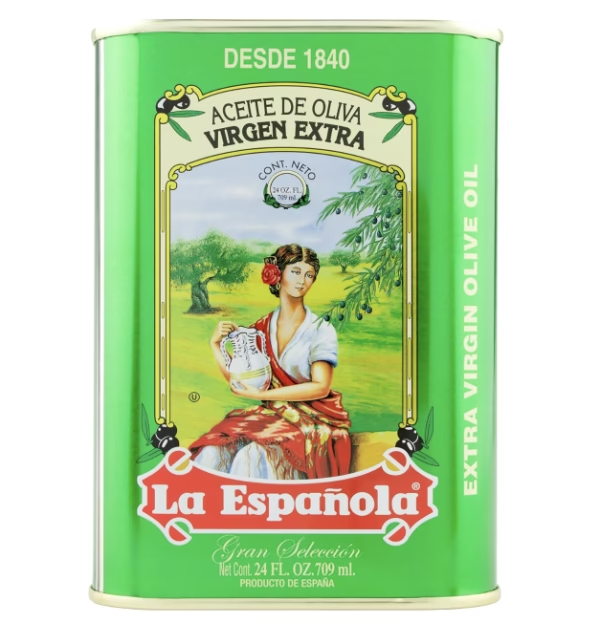
Spanish Extra Virgin Olive Oil
A good-quality Spanish olive oil is one of the simplest ways to elevate this dish, and I always suggest using an extra virgin olive oil. It helps the chicken skin turn irresistibly crisp while coating the vegetables in rich Mediterranean flavour as they roast.
Combined with the juices released by the tomatoes and onions, the olive oil creates a light, silky sauce that’s perfect for spooning over the chicken or mopping up with plenty of crusty bread.
Spain is the world’s largest producer of olive oil, with regions such as Andalusia, Castilla-La Mancha, and Extremadura producing some of the finest extra virgin olive oils available.

Nutrition Facts (Per Serving)
Servings: 8
| Nutrient | Amount per Serving | % Daily Value* |
|---|---|---|
| Calories | 370 kcal | 19% |
| Total Fat | 18 g | 23% |
| Saturated Fat | 4.5 g | 23% |
| Trans Fat | 0 g | — |
| Cholesterol | 16 mg | 5% |
| Sodium | 420 mg | 18% |
| Total Carbohydrates | 42 g | 15% |
| Dietary Fiber | 2 g | 7% |
| Total Sugars | 1.5 g | — |
| Added Sugars | 0 g | 0% |
| Protein | 9 g | 18% |
| Vitamin D | 0 mcg | 0% |
| Calcium | 95 mg | 7% |
| Iron | 2.7 mg | 15% |
| Potassium | 140 mg | 3% |
*Percent Daily Values are based on a 2,000-calorie diet.
Recipe Nutrition Summary
- Yield: 8 servings
- Calories per recipe: ~2,960 kcal
- Primary calorie sources: bread flour, extra virgin olive oil, Manchego cheese
- Good source of: complex carbohydrates, monounsaturated fats, protein
- Mediterranean diet friendly: rich in olive oil, vegetables, and moderate cheese, with anchovies providing omega-3 fats and minerals.
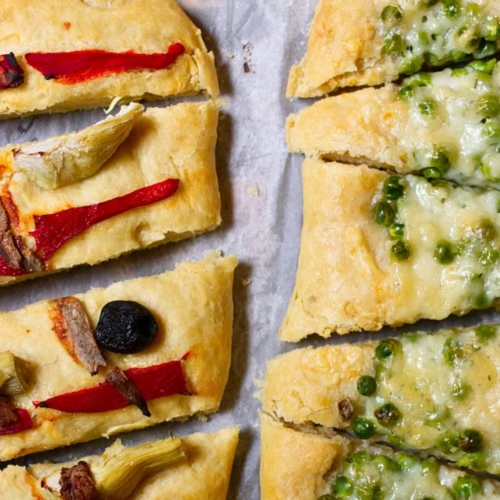
How to Make Spanish Cocas | Authentic Valencian & Catalan Flatbread Recipe (2 Easy Toppings)

Equipment
- Sieve for the flour
- large mixing bowl
- Damp kitchen towel
- Measuring cups and spoons
- Box grater
- Cutting board
- Chef knife
- Large baking tray
- Oven
Ingredients
Coca Dough: (makes 2 large cocas)
- 500 g 17.5 oz strong bread flour
- 150 ml 5 fl oz extra virgin olive oil
- 150 ml 5 fl oz water
- 20 –25 g 0.7-0.9 oz fresh yeast, or approximately 14 g (0.5 g) of active dry (powdered) yeast (typically 2 sachets)
- 5 g large pinch salt
Toppings for Coca de Recapte Con Anchoas:
- 100 g 3.5 oz jar piquillo peppers, sliced into long strips
- 100 g 3.5 oz jar artichokes (whole or quartered)
- Pitted black olives
- 2-3 Anchovies
- Extra virgin olive oil
Toppings for Cocas de Guisantes Con Queso Manchego:
- 100 g 3.5 oz Green peas (fresh or frozen)
- 100 g 3.5 oz Manchego cheese, grated
Instructions
Step 1 - Prepare the Coca Dough
- Start by sieving the flour into a large bowl.500 g 17.5 oz strong bread flour
- Add the powdered yeast, salt, water and olive oil and mix with a large spoon for around 30 seconds. It will look a little gooey.150 ml 5 fl oz extra virgin olive oil, 150 ml 5 fl oz water, 20 –25 g, 5 g large pinch salt
- Add a dusting of flour to a clean benchtop, then roll the dough out and knead by hand for around 1-2 minutes. It should become an elastic ball that easily sticks together, and will be slightly moist but not sticky.
- Note: if the dough looks dry and is flaking apart, add a splash more water and continue to knead the dough until you get an even ball with the right texture as mentioned above.Extra virgin olive oil
- Cover the dough with a damp kitchen cloth and set aside to rise (at room temperature) for 1–2 hours.
- Optional: If refrigerating, add to the fridge covered and refrigerate for at least 24 hours. When ready to use, bring the dough to room temperature before dividing into individual cocas.
Step 2 - Prepare the Cocas Toppings
- Preheat a fan-forced oven to 200°C (400°F).
- Start by dividing the coca dough into 2 even pieces, then flatten out each piece with your hands and fingers until they are around 1 cm (½ inch) thick. Note that they don’t need to be perfectly flat or smooth, a few divots in the dough actually helps the toppings stay intact.
- Transfer the cocas onto a lined baking tray.
- For the cocas with roasted veg and anchovies: Slice the piquillo peppers into thin strips, around half an inch thick (1cm) and add to the cocas, then add some pieces of artichoke.100 g 3.5 oz jar piquillo peppers, sliced into long strips, 100 g 3.5 oz jar artichokes (whole or quartered), Pitted black olives
- Top with 2-3 anchovies and a few black olives as garnish.2-3 Anchovies
- For the pea and Manchego cocas: add some peas first, then top with grated manchego cheese.100 g 3.5 oz Green peas (fresh or frozen), 100 g 3.5 oz Manchego cheese, grated
Step 3 - Bake Cocas and Serve
- Bake for 15-20 minutes, just until the toppings begin to crisp up and the cheese is melted.
- Serve with a glass of Spanish wine or beer. Salud!
Video
Notes
Expert Tips for Perfect Spanish Cocas
Use good-quality Spanish olive oil: Because coca dough contains a generous amount of olive oil, its flavor is one of the defining characteristics of authentic Spanish coca dough. Choose a fruity extra virgin olive oil for the best Mediterranean flavor. Learn more about the different types in our Spanish olive oil guide. Don’t over-knead the dough: Unlike pizza dough, Spanish coca dough should remain tender rather than overly elastic. Knead it just until it forms a smooth, cohesive ball. Let the dough rise fully For the best texture, allow the dough to rise for 1–2 hours at room temperature, or refrigerate it overnight for a deeper, more complex flavor. Keep toppings light Traditional Spanish Cocas are not overloaded with toppings. A thin layer of vegetables, anchovies, olives, or Manchego cheese allows the olive-oil-rich dough to remain crisp and flavorful. Create small divots in the dough Press your fingertips gently into the dough before adding toppings. This helps hold vegetables and anchovies in place while baking. Bake on a hot tray Preheating the baking tray for a few minutes can help create the characteristic crisp edges of a traditional Valencian coca recipe.FAQs Spanish Cocas
Are Spanish Cocas the same as pizza?
No. While Spanish Cocas and pizza are both flatbreads with toppings, they are not the same. Cocas usually have an olive-oil-rich dough and feature traditional Spanish toppings such as roasted vegetables, anchovies, olives, peas, and Manchego cheese.
What is the difference between Coca de Recapte and pizza?
Coca de Recapte is a traditional Catalan and Valencian coca topped with roasted vegetables and often anchovies. Unlike pizza, it is not typically covered in tomato sauce and mozzarella; the emphasis is on the vegetables, olive oil, and regional flavors.
What does “coca” mean in Spanish food?
In Spanish cuisine, “coca” refers to a type of flatbread or pastry that can be either savory or sweet. It is especially common along Spain’s Mediterranean coast.
Can I make Spanish Cocas with different toppings?
Yes. Traditional cocas are highly adaptable and can be topped with vegetables, seafood, cheese, olives, capers, or sweet ingredients depending on the region and occasion.
Where do Spanish Cocas originate?
Spanish Cocas originate from the Mediterranean regions of Valencia and Catalonia in eastern Spain. These traditional flatbreads have been made for centuries in local bakeries and homes, where they are enjoyed as tapas, snacks, and festive foods.
In Valencia, cocas are often associated with casual bakery culture and seasonal celebrations, while in Catalonia, varieties such as Coca de Recapte are famous for their rustic toppings of roasted vegetables, olives, and anchovies. Together, these regions have shaped the diverse and authentic tradition of Spanish Cocas that is still celebrated across Spain’s Mediterranean coast today.
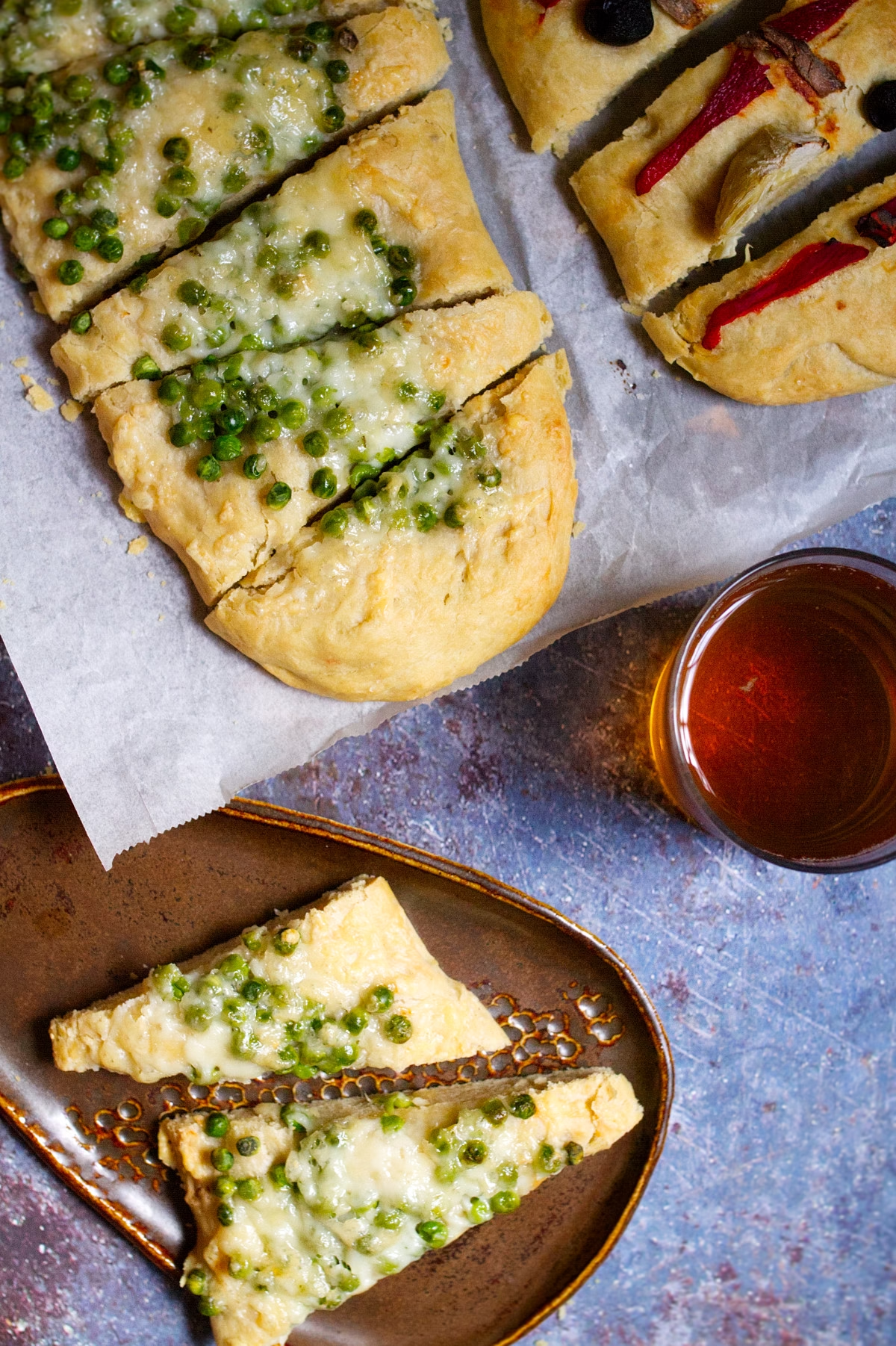
Love this recipe?
Leave us a comment and tell us your favorite Spanish recipe!

Pumpkin and Caramelized Onion Cocas
Vegan recipe
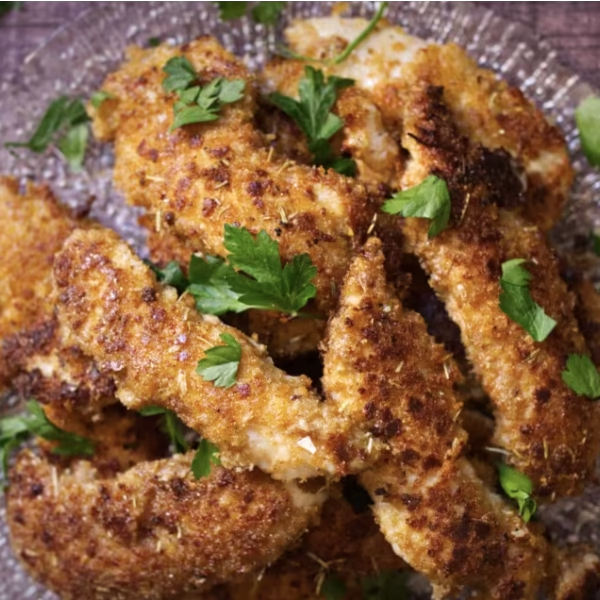
Crispy Chicken Tenders
With a Yogurt Dipping Sauce
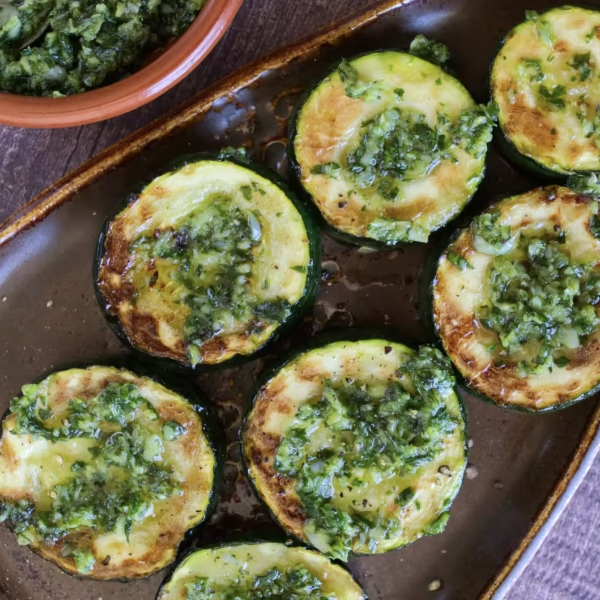
Garlic Zucchini (Courgette)
Easy vegan tapas or side
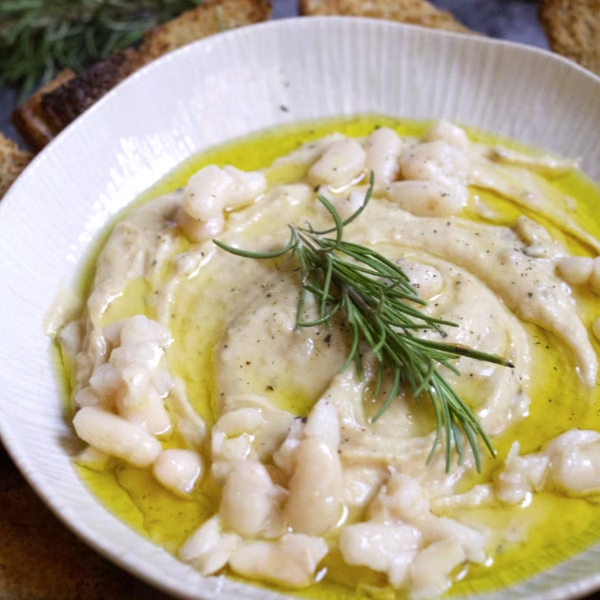
White Bean Dip with Caramelized Onion
Creamy Crowd-Pleasing Dip
0 Comments