
Valencian Chicken With Citrus And Vermouth
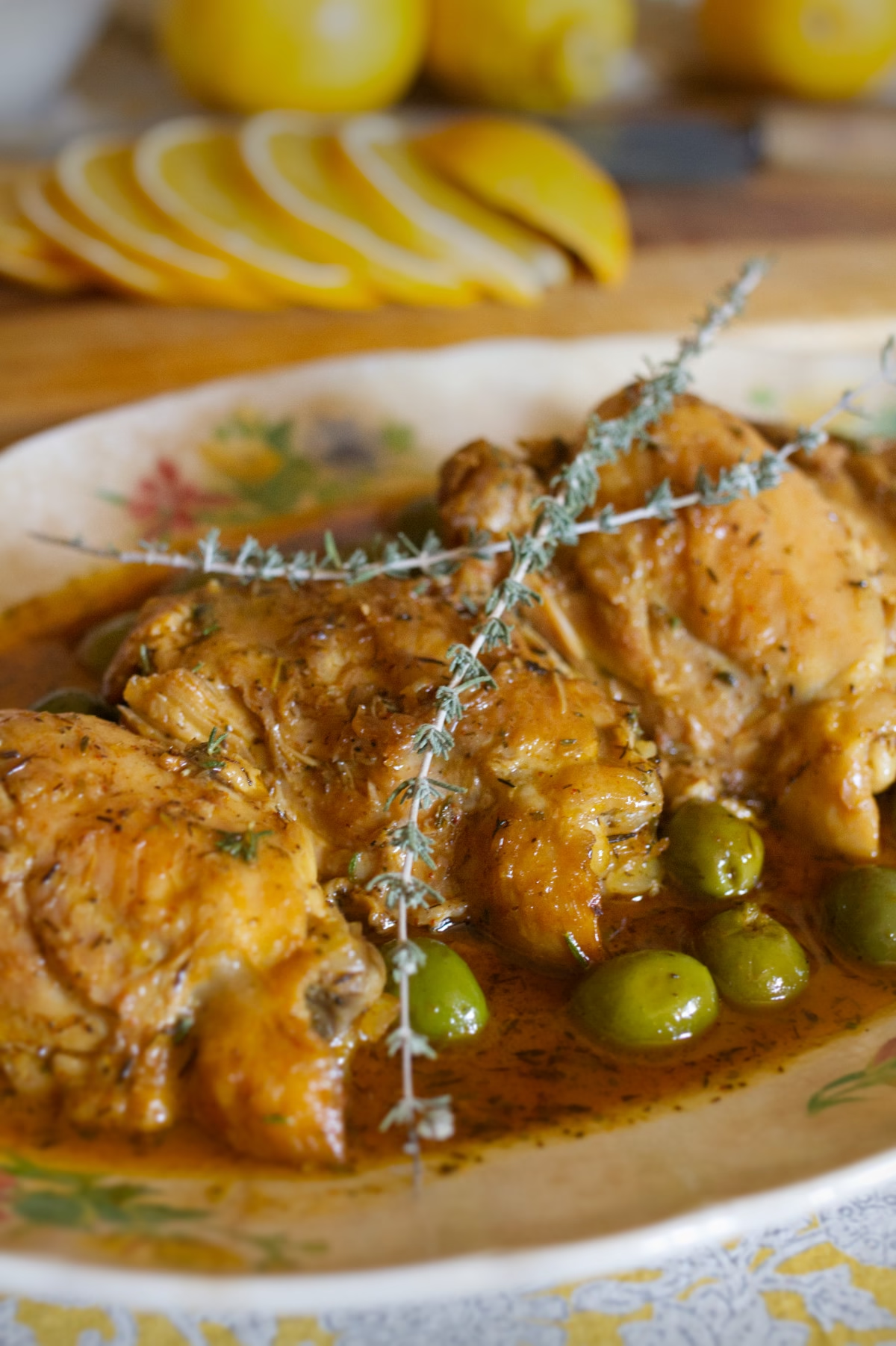
Valencian Chicken With Citrus And Vermouth takes inspiration from a recently published recipe by the Guardian’s Rachel Roddy, where she recreates a Roman classic that is commonly made with rabbit, white wine, and plenty of citrus juices. It’s a humble recipe that allows good-quality ingredients to speak for themselves, something that is shared with Italian and Spanish cooking.
Living in Valencia, there is a thirst for anything with oranges, and adding a Valencian twist this recipe was easy. By replacing the wine with Valencian vermouth (more about this later on), and adding some spice with sweet smoked paprika and white pepper, and then finished with some green olives, this dish combines sweetness, umami, and just a little tanginess with succulent chicken pieces that fall off the bone.
The result is a warming chicken dish that sings with citrus flavors and has a wonderful rich and sweet sauce thanks to the inclusion of Valencian vermouth. To round off the flavors, I’ve added some whole green olives (with seed) and garnished the dish with plenty of freshly picked thyme from the mountains just behind our house.
Can’t source Valencian vermouth? Don’t worry, I’ll give you plenty of substitutes below.
This post may contain affiliate links.
Serving:
4 as a Main
Ready in:
1 hour, 5 minutes
Skill level:
Easy, One-Pot
Serve with:
Steamed veg, potatoes, rice
Watch step-by-step recipe video
🎥 Prefer to watch? Check out the Valencian Chicken Step-by-step video recipe guide here, or click on the thumbnail below to watch the video on our YouTube Channel.

How to Make Valencian Chicken With Citrus and Vermouth
With one large pan and a lemon juicer on hand, this recipe is delightfully easy to make and only has around 5 minutes of prep time, namely juicing the citrus fruit. If you’re short on time, you could use fresh store-bought orange juice, but I recommend doing the hard yards and juicing your own citrus for best flavor.
This is a great chicken dish that comes together in one large pan or skillet (I used a Spanish olla de hierro) and is ready in a little over an hour.
Ingredients
- 1 kg / 35 oz. bone-in chicken thighs (or a mix of legs and thighs)
- 4 tbsp extra virgin olive oil
- 100-150ml / 3.4-5fl oz. Valencian vermouth
- 1 tbsp dried thyme
- 1 tsp sweet smoked paprika
- 1 tsp ground white pepper
- 400ml / 13.5fl oz. fresh citrus juice – a mix of orange, grapefruit, mandarin
- ½ cup green olives
- A few stalks fresh thyme
- Salt to taste
Equipment
- Orange juicer
- Cutting board
- Chef knife
- Cooking tongs
- Large Skillet or olla de hierro
Instructions
Step 1 – Brown chicken thighs
- First, we start by seasoning the chicken thighs generously with salt.
- Add the olive oil to the skillet over a medium-high heat.
- Next, we will add the chicken and brown on all sides, around 4-5 minutes per side.
- Remove the browned chicken from the pan and set aside for use later.
Step 2 – Deglaze pan
- There will be plenty of rendered fat from the chicken in the skillet. Keep it all.
- Pour in the vermouth and let it bubble away for a minute or two, scraping the bottom of the pan to release the flavor.
- The alcohol from the vermouth will burn off as it evaporates, and once it has evaporated to around half the quality, move on to step 3.
Step 3 – Build sauce
- Reduce heat to medium.
- We add the freshly squeezed citrus juices (we used orange and mandarin) and the dried thyme, sweet smoked paprika, white pepper, and stir through.
- Bring to a simmer and then add the chicken pieces back to the skillet.
- Add the green olives around the chicken pieces.
Step 4 – Simmer
- Keep the heat medium, a low simmer is ideal and rotate the chicken thighs a few times as it cooks. You will want to simmer for around 40-50 minutes or until the sauce has reduced to around half.
- Once done, rest the chicken for around 10 minutes so the sauce can thicken slightly.
- Optionally, you can continue to simmer the sauce longer until it has your desired consistency.
Step 5 – Serve
- Serve onto a large serving platter, then drizzle the sauce over the chicken thighs.
- We love to serve this dish with some steamed rice and some steamed green beans for a balanced meal option.
- (Optional) Garnish with some fresh sprigs of thyme.
Buen Provecho!
Expert Tips
- Brown the chicken well. Take your time browning the chicken thighs on all sides before adding the sauce. This creates a deeper, savory flavor that makes the finished dish even more delicious.
- Use freshly squeezed citrus. A mix of oranges and mandarins gives the sauce a lovely natural sweetness, while a little grapefruit or lemon adds extra tang. Taste your citrus juice before cooking, as sweetness and acidity can vary.
- Choose your vermouth carefully. Red vermouth brings sweeter, spiced notes, while white or orange vermouth offers a lighter, more citrus-forward flavor. Sweet sherry is an excellent alternative if you can’t find Valencian vermouth, although Pedro Ximénez is probably too sweet for this dish.
- Keep the sauce at a gentle simmer. Once the chicken is back in the pan, avoid boiling the sauce too vigorously. A low, steady simmer helps the chicken become tender while allowing the citrus and vermouth flavors to develop.
- Let the sauce reduce naturally. Simmer until the liquid has reduced and the flavors have concentrated. If you’d prefer a thicker sauce, remove the chicken once cooked and simmer the sauce for a few extra minutes.
- Don’t skip the green olives. Their salty, savory flavor balances the sweetness of the citrus and vermouth beautifully. Add them whole for bursts of flavor throughout the dish.
- Rest before serving. Let the chicken rest for around 10 minutes after cooking. This gives the sauce time to settle and thicken slightly before you spoon it over the chicken.
Serving tip: Serve with steamed rice, roasted potatoes or crusty bread to soak up every last drop of that fragrant citrus and vermouth sauce. A handful of fresh thyme makes a lovely finishing touch.

Valencian Vermouth and Substitutes
If you can’t source Valencian vermouth, any vermouth will work (or a sweet sherry will also work well).
Modern-day vermouth has its origins in Italy, but it’s a popular aperitif all over Spain, particularly in Valencia, Catalonia, and Madrid. If you visit nearly any bar in Valencia, you can order a vermouth, usually asking for a red or white vermouth, but (being Valencia) there is also orange vermouth.
There are different Valencian brands that produce vermouth and it’s readily available in supermarkets and wine stores. I’d say red is the most traditional, followed by white, but we’re seeing the orange version on offer more and more (around Valencia anyway). Here are the main differences between the varieties:
- Red (rojo) – From dark amber to reddish brown, it’s very sweet and heavily spiced with the likes of cinnamon. It’s usually served with a slice of orange and/or olives.
- White (blanco) – From clear to pale yellow, it’s not as sweet and syrupy as red, so a lighter drink. It’s often served with a slice of lemon.
- Orange (naranja) – From pale yellow to mild orange in color, it’s the least sweet and has the heaviest citrus notes. It’s also often served with a slice of orange.
Which Vermouth to Use in This Recipe
The choice is yours…depending on a few factors, like what you can source and how sweet you want your dish. Red vermouth is likely the easiest for you to buy overseas. If you can’t find a Spanish brand, you should be able to find an Italian vermouth.
You can also use a Spanish sherry. I’d lean toward a cream (blend of sweet and dry) or moscatel (sweet sherry). Moscatel is probably the most similar, although it’s more floral and sherries don’t have as much spice, so they’ll all add a different flavor. Pedro Ximénez is the sweetest and will overpower the other flavors in this dish.

Use Freshly Squeezed Orange Juice
Aim to use a couple of different types of citrus fruit for this recipe. It adds layers of flavor and can also give the sauce a lovely sweet and tart flavor. I opted for Valencian oranges and mandarins which are just coming back into season here.
I used around 200ml of freshly squeezed orange juice which brings plenty of sweetness. We also added around 200ml of freshly squeezed mandarin juice which adds just a hint of tartness to the sauce.
If you’re looking for a more tart sauce, add a little lemon juice or grapefruit juice. I don’t recommend using lime juice as it’s too potent.

Love Oranges? Here Are More Orange Recipes to Try
We’re back into orange season here, but it’s one of those fruits you can typically find available year-round since they store well. Here are some other recipes that use the humble yet sensational orange:
- Andalusian orange salt cod salad – The Andalusia region is another famous orange producer in Spain. Also known for its incredible seafood, it’s no wonder this salad—known locally as Remojón—is so popular.
- Spicy salmon with cayenne, paprika, and orange – A combination of many of Spain’s favorite ingredients, this baked salmon is utterly delicious layered over a bed of orange slices.
- Jamón Ibérico salad – Cured salty ham mixed with orange, mozzarella, almonds, and greens, plus a little honey, vinegar, orange dressing to top it off.
- Orange and pink grapefruit cake – This moist sponge cake combines the sweetness of orange with the tartness of grapefruit, and uses just 6 ingredients.
- Baked cheesecake with honey and orange – Cheesecakes are hugely popular in Spain, and this recipe adds a little twist, which makes it irresistible.
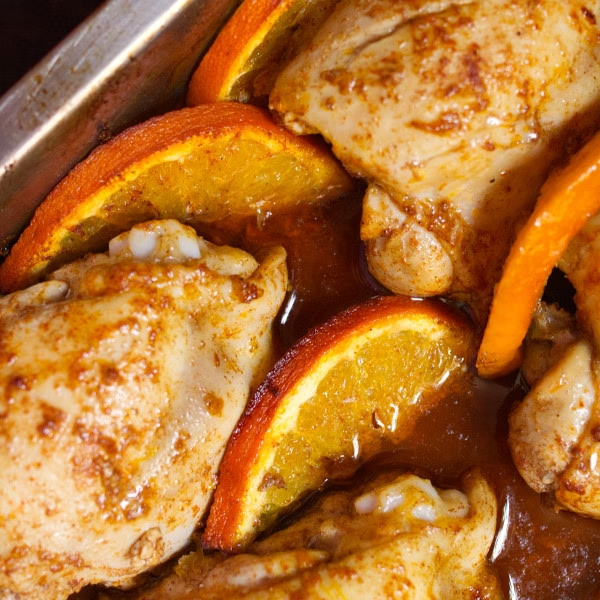
Spanish Orange Chicken
Easy One-Pan Weeknight Dinner

Spanish Vermouth Chicken
In a Deliciously Rich Sauce

Baked Orange Chocolate Cheesecake
with Sherried Candy Orange Slices
Nutrition Facts (Per Serving)
Estimated values, based on 4 servings. Daily Values (DV) are based on a 2,000-calorie diet.
|
Nutrient |
Amount per serving |
% Daily Value |
|
Calories |
570 kcal |
— |
|
Total Fat |
42 g |
54% |
|
Saturated Fat |
9.5 g |
47% |
|
Cholesterol |
90 mg |
30% |
|
Sodium |
505 mg |
22% |
|
Total Carbohydrates |
16 g |
6% |
|
Dietary Fiber |
1.3 g |
4% |
|
Total Sugars |
12 g |
— |
|
Protein |
33 g |
66% |
Notes:
- These are approximate estimates, assuming skin-on chicken thighs and that some sauce and cooking fat are consumed.
- Sodium can vary considerably depending on the salt added and the brine content of the olives.
- Calories and fat will be lower if you use skinless chicken thighs or leave some of the rendered fat and sauce in the pan.
- The figures exclude any rice, green beans or other sides.
FAQs
What is Valencian chicken with citrus and vermouth?
Valencian chicken with citrus and vermouth is a one-pan chicken dish inspired by Mediterranean cooking. Bone-in chicken thighs are simmered in a sauce made with fresh citrus juice, Valencian vermouth, olive oil, thyme, smoked paprika and green olives. The result is tender chicken with a rich, aromatic sauce that balances sweet, savory and tangy flavours.
Can I use white wine instead of vermouth?
Yes! Dry or sweet white wine can work well in this recipe, although they will change the flavor of the sauce. Vermouth adds herbal, spiced and slightly sweet notes that complement the citrus. Sweet sherry is another excellent alternative if you want to keep a Spanish twist and closer to the original flavor profile.
What citrus fruits work best for this chicken recipe?
Fresh oranges and mandarins are excellent choices because they bring natural sweetness and a fragrant citrus flavor. For a more tart sauce, try adding some grapefruit or lemon juice. We recommend using a combination of citrus fruits to create a more balanced, layered flavour.
Can I use boneless chicken thighs instead of bone-in thighs?
Yes, boneless chicken thighs will work, and they’ll cook more quickly. However, bone-in thighs tend to stay juicy during longer cooking and contribute extra flavor to the sauce. If using boneless thighs, start checking for doneness earlier and cook until the thickest part reaches 74°C (165°F).
Can I make Valencian chicken with citrus and vermouth ahead of time?
Yes! This dish is ideal for making ahead because the flavors can develop as the sauce rests. Cook the chicken fully with the sauce, then take it off the stove top to coolcool it promptly and refrigerate in an airtight container as soon as it has fully cooledwithin two hours. Reheat thoroughly until the chicken reaches 74°C (165°F), adding a splash of water or citrus juice if the sauce has thickened too much.
What should I serve with citrus and vermouth chicken?
Steamed rice, roasted potatoes or crusty bread are excellent options for soaking up the citrus and vermouth sauce. For a lighter Mediterranean-style meal, serve the chicken with steamed green beans, sautéed greens or a simple seasonal salad.
Can I make this recipe without alcohol?
Yes. Replace the vermouth with chicken stock and add a little extra citrus juice to taste. You can also add a small splash of white wine vinegar for acidity. The flavor will be different from the original, and the finished sauce will lack some of vermouth’s herbal complexity.
How do I know when the chicken is cooked?
The chicken should be tender, with the meat pulling easily away from the bone. For food safety, check the thickest part of the chicken with a meat thermometer, avoiding the bone. It should reach at least 74°C (165°F).
How should I store leftover citrus and vermouth chicken?
Allow leftovers to cool (if they aren’t already) and refrigerate them in an airtight container within two hours of cooking. Store in the fridge for up to 3-4 days. Reheat thoroughly before serving, ensuring the chicken reaches 74°C (165°F).
Can I use bottled orange juice instead of freshly squeezed citrus juice?
You can use bottled orange juice if you’re short on time, but freshly squeezed juice generally gives the sauce a brighter, fresher flavour. Choose unsweetened juice without added sugar, and consider adding a little fresh lemon or mandarin juice to bring back some of the recipe’s natural citrus character.
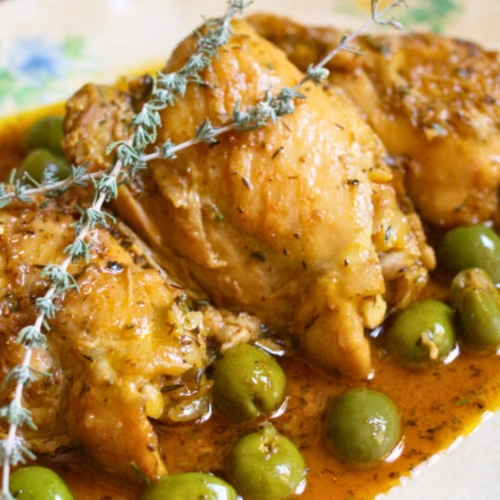
Valencian Chicken With Citrus And Vermouth

Equipment
- Orange juicer
- Cutting board
- Chef knife
- Cooking Tongs
- Large Skillet or olla de hierro
Ingredients
- 1 kg / 35 oz. bone-in chicken thighs or a mix of legs and thighs
- 4 tbsp extra virgin olive oil
- 100-150 ml / 3.4-5fl oz. Valencian vermouth
- 1 tbsp dried thyme
- 1 tsp sweet smoked paprika
- 1 tsp ground white pepper
- 400 ml / 13.5fl oz. fresh citrus juice – a mix of orange grapefruit, mandarin
- ½ cup green olives
- A few stalks fresh thyme
- Salt to taste
Instructions
Step 1 - Brown chicken thighs
- First, we start by seasoning the chicken thighs generously with salt.1 kg / 35 oz. bone-in chicken thighs, Salt to taste
- Add the olive oil to the skillet over a medium-high heat.4 tbsp extra virgin olive oil
- Next, we will add the chicken and brown on all sides, around 4-5 minutes per side.
- Remove the browned chicken from the pan and set aside for use later.
Step 2 - Deglaze pan
- There will be plenty of rendered fat from the chicken in the skillet. Keep it all.
- Pour in the vermouth and let it bubble away for a minute or two, scraping the bottom of the pan to release the flavor.100-150 ml / 3.4-5fl oz. Valencian vermouth
- The alcohol from the vermouth will burn off as it evaporates, and once it has evaporated to around half the quality, move on to step 3.
Step 3 - Build sauce
- Reduce heat to medium.
- We add the freshly squeezed citrus juices (we used orange and mandarin) and the dried thyme, sweet smoked paprika, white pepper, and stir through.1 tbsp dried thyme, 1 tsp sweet smoked paprika, 400 ml / 13.5fl oz. fresh citrus juice – a mix of orange, 1 tsp ground white pepper
- Bring to a simmer and then add the chicken pieces back to the skillet.
- Add the green olives around the chicken pieces.½ cup green olives
Step 4 - Simmer
- Keep the heat medium, a low simmer is ideal and rotate the chicken thighs a few times as it cooks. You will want to simmer for around 40-50 minutes or until the sauce has reduced to around half.
- Once done, rest the chicken for around 10 minutes so the sauce can thicken slightly.
- Optionally, you can continue to simmer the sauce longer until it has your desired consistency.
Step 5 - Serve
- Serve onto a large serving platter, then drizzle the sauce over the chicken thighs.
- We love to serve this dish with some steamed rice and some steamed green beans for a balanced meal option.
- (Optional) Garnish with some fresh sprigs of thyme and serve with a glass of Vermouth, wine or sherry.A few stalks fresh thyme
Video
Notes
🍗 Tender, bone-in chicken thighs
🍸 Valencian vermouth for a rich, aromatic sauce
🫒 Green olives for a savory Mediterranean finish
🌿 Thyme, smoked paprika, and white pepper for extra flavor
Love this recipe?
Leave us a comment and tell us your favorite Spanish recipe!

0 Comments